
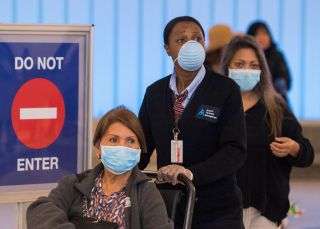
The World Health Organization (WHO) has finally declared a pandemic over COVID-19, the disease caused by the new coronavirus, after it spread to more than 100 countries and lead to tens of thousands of cases in a span of a few months.
“We are deeply concerned both by the alarming levels of spread and severity [of COVID-19], and by the alarming levels of inaction,” Tedros Adhanom Ghebreyesus, the director-general of WHO, said in a news conference on Wednesday (March 11). “We have therefore made the assessment that COVID-19 can be characterized as a pandemic.”
This is the first time WHO has declared a pandemic over a coronavirus, Ghebreyesus said. He noted the number of COVID-19 cases reported outside China has soared in recent days — rising 13-fold in the past two weeks. There are now more than 120,000 cases worldwide, and more than 4,300 deaths, according to Johns Hopkins University.
All About Coronavirus
—Coronavirus in the US: Map, case counts & news
—Live updates on the coronavirus
—What are the symptoms?
—How deadly is the new coronavirus?
—How does the coronavirus spread?
—Can people spread the coronavirus after they recover?
WHO has been cautious in its decision to declare a pandemic, because the word, “if misused, can cause unreasonable fear, or unjustified acceptance that the fight is over,” Ghebreyesus said.
But he stressed that the declaration of a pandemic today does not change the threat of the virus, or what countries should do to respond. “We have called every day for countries to take urgent and aggressive action. We have rung the alarm bell loud and clear.”
Ghebreyesus said countries should be working to detect, isolate and treat COVID-19 cases and trace their contacts; protect and train healthcare workers and prepare hospitals; and communicate with the public about the risks of the disease and how to protect themselves.
Of the word “pandemic” Ghebreyesus noted “there’s been so much attention on one word. Let me give you some other words that matter much more… Prevention. Preparedness. Public health. Political leadership. And most of all, people,” he said.
The declaration of a pandemic comes more than a month after WHO declared COVID-19 a “public health emergency of international concern.”
Sourse: www.livescience.com
WHO has been cautious in its decision to declare a pandemic, because the word, “if misused, can cause unreasonable fear, or unjustified acceptance that the fight is over,” Ghebreyesus said.
But he stressed that the declaration of a pandemic today does not change the threat of the virus, or what countries should do to respond. “We have called every day for countries to take urgent and aggressive action. We have rung the alarm bell loud and clear.”
Ghebreyesus said countries should be working to detect, isolate and treat COVID-19 cases and trace their contacts; protect and train healthcare workers and prepare hospitals; and communicate with the public about the risks of the disease and how to protect themselves.
Of the word “pandemic” Ghebreyesus noted “there’s been so much attention on one word. Let me give you some other words that matter much more… Prevention. Preparedness. Public health. Political leadership. And most of all, people,” he said.
The declaration of a pandemic comes more than a month after WHO declared COVID-19 a “public health emergency of international concern.”
Sourse: www.livescience.com
I would like to share my story and express my great gratitude to Maria. My husband Alexander was literally taken…
I am excited to share with you a review of Maria, a fortune teller who helped my husband overcome a…
I would like to share my delightful experience of working with fortuneteller Maria Nikolayevna. Her talent and ability to predict…
It was very difficult for me after my husband left me. I tried everything I could to convince him to…
Lately, many of my acquaintances wonder why I have blossomed and look so happy. But before, I was a gloomier…
Your email address will not be published.