

There were 300 members of his lineage present at his burial. Share Article Share Article Facebook X LinkedIn Reddit Bluesky Email Copy Link Link copied Bookmark

Add us as preferred source Comments
He appreciated life’s humble delights and found pleasure in fishing and tending to his kitchen garden. Dairy products were central to his diet, while he dedicated his spare time to a bit of bird hunting.
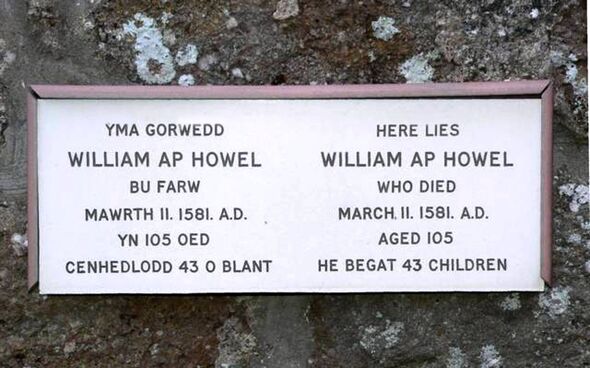
The church’s chronicles reveal that he lived to the impressive age of 105, maintaining sharp mental acuity and memory throughout a life that was, by typical measures, quite ordinary. He might easily have faded into historical obscurity were it not for one remarkable feat: over the course of 81 years, he sired 43 offspring.
Article continues below ADVERTISEMENT
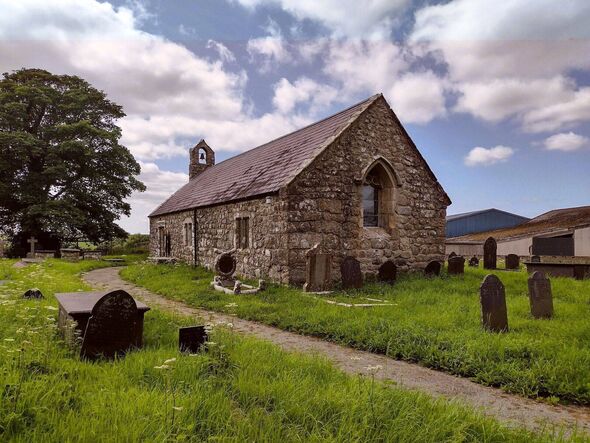
This accomplishment, if one can call it that, gave considerable renown to the small parish of Tregaian on Anglesey. William Ap Howel’s memory endures in the village churchyard of the 14th-century chapel, dedicated to a saint far less documented than the parish’s most celebrated member.
When travel writer Thomas Pennant journeyed across Anglesey in the latter part of the 18th century, meticulously noting the copper mines of Parys Mountain, he felt compelled to mention the island’s most prolific progenitor in his 1778 work, A Tour in Wales, according to WalesOnline.
He remarked that, contrary to expectations, the “great patriarch of Tregaian” was not a towering figure with an insatiable appetite, but rather “small in stature, of a cheerful, sociable nature; but frugal in his eating habits, subsisting largely on milk”. Pennant further stated: “He dedicated his time to agricultural pursuits, and during his downtime, enjoyed fishing and bird hunting.”
Article continues below ADVERTISEMENT
Large families were common when he passed away in March 1581. Yet William’s family size was extraordinary even by the norms of the time: the average household size across England and Wales in the 16th century was a mere 4.75 – a number that remained fairly stable until the First World War.
Article continues below ADVERTISEMENT
Beginning at 21 years of age, William established a pattern of fathering a child every two years, continuing this trend well into his later years. When he died at the age of 105, his youngest child was a son named Griffith, who was only two-and-a-half years old.
Sustaining such a vast family necessitated five women. His first wife, Elen Williams, bore him 22 children; his second wife, Katherine Richards, produced another 10.
His third wife, Ellen Williams, seemingly more aware of his tendencies, only contributed four. His three marriages resulted in a collective sum of 36 children.
Yet William’s family didn’t stop there. He also had two ‘concubines’: Jonet ferch William gave him two more children, while Lecky Lloyd brought an additional five into the world.
Their combined reproductive output sparked a notable demographic rise in this secluded area of Anglesey. For context, throughout William’s lifespan, the wider parish of Llanfairpwll had a population of approximately 80.
At the time of his demise, 80 of William’s descendants were residing in Tregaian parish. Moreover, some seemed determined to continue the family tradition: his eldest daughter Alice, then 72, had been married twice and, according to parish records, she “has numerous offspring” of her own.
The record continued to state: “At his funeral, it was estimated that there were approximately 300 persons descended from him. He has children’s children to the fourth generation in abundance.”
Providing for such a large family might have presented difficulties, although many of his children would likely have left home before the arrival of the next Ap Howel baby. However, local gossip suggested he used his hunting abilities as a poacher to supplement the family’s food supply.
Baptisms at the modest medieval St Caian’s church could have posed their own set of issues. In 1847, vicar Harry Longueville Jones observed that the font was “scarcely large enough for immersion”.
Parish documents suggest that William enjoyed excellent health throughout his life. “The old man was of medium height, with a good complexion, never bothered by colic, gout, or kidney stones, and seldom ill,” they noted.
“Of moderate appetite, he lived by farming, engaged extensively in fishing and bird hunting, and maintained his senses perfectly until the end.”
William’s astonishing total of 43 children was remarkable by any measure. Yet, in the annals of human reproduction, he is but a minor mention.
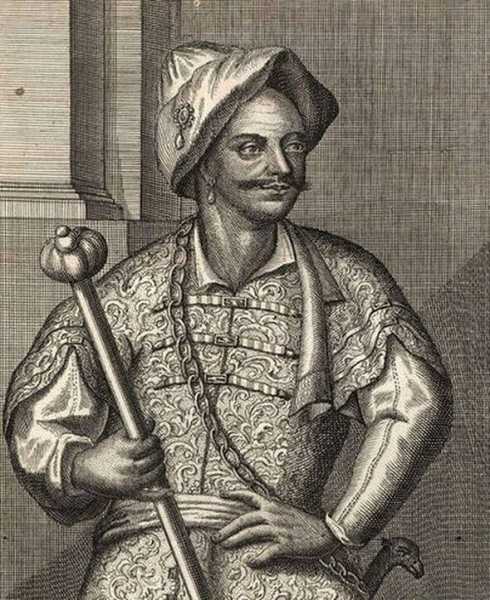
Moulay Ismail Ibn Sharif, an 18th-century Moroccan monarch, would have dismissed such numbers. With a harem of 500 women, he is reported to have fathered 525 sons and 342 daughters. In fact, Guinness World Records estimated a total of 1,042 children.
Trending
Researchers at Vienna University suggested an even greater number, proposing 1,171. Excluding sperm donors (Viennese physiologist Bertold Paul Wiesner is believed to have fathered up to 1,000 children through artificial insemination), royalty have historically been the most prolific.
Notable examples include 18th-century Polish King Augustus II the Strong (approximately 370 children), and 20th-century Swazi King Sobhuza II, who reportedly had 70 wives and 210 children.
Further examples include Sultan Ibrahim Njoya, Cameroon’s King of Bamum (around 600 wives, 177 children), Emperor Minh Mạng (142) and Saudi Arabia’s King Saud (approximately 110).
Mohammed Bello Abubakar, who died in 2017, was another contender, having wedded 86 women in Nigeria and fathered 170 children. In 2008, he was arrested for polygamy after exceeding the four-wife limit.
Even within Wales, William ap Gruffydd may not hold the record. That alleged distinction belongs to Augustus John, whose artistic fame was matched by his notorious licentiousness.
The day’s biggest headlines in UK and World news Subscribe Invalid email
We use your sign-up to provide content in ways you’ve consented to and to improve our understanding of you. This may include adverts from us and 3rd parties based on our understanding. You can unsubscribe at any time. Read our Privacy Policy

Get More of Our News on Google
Set Daily Express as a ‘Preferred Source’ to get quicker access to the news you value.

He is reported to have fathered “upwards of 100 children”, mostly outside of wedlock – although some contend that this figure is greatly exaggerated.
Currently, William’s achievements are commemorated by a simple plaque and an inscribed slate at the Grade II*-listed St Caian’s Church. These document his death on March 11, 1581, having “fathered 43 children”.