


A recent scientific examination of the Shroud of Turin, widely thought to be the burial cloth of Jesus, has introduced a novel aspect to the enduring controversy surrounding its origins, questioning long-established beliefs about the renowned relic. The linen fabric, which displays the faint imprint of a man with a beard, considered by some to be Jesus, has consistently divided opinions between those who regard it as a holy artifact and those who assert it is a medieval fabrication.
Now, investigators who have analyzed DNA traces on the material report that their discoveries could further complicate the narrative. Employing sophisticated genetic analysis, scientists detected a composite of DNA originating from various European, Middle Eastern, and other global regions. This suggests the cloth may have been touched by a multitude of individuals throughout the ages, making it considerably more challenging to ascertain its initial source.
Article continues below ADVERTISEMENT
READ MORE: Historic hotel to close in UK city after 161 years – ‘deeply upsetting’
READ MORE: Major UK airport to close down forever – in business for 90 years
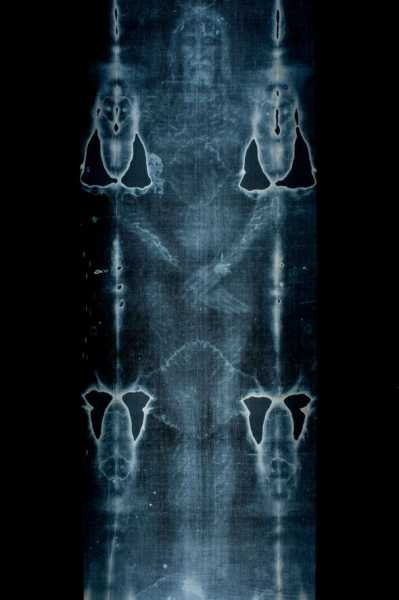
The textile, measuring 14.3 by 3.7 inches (4.4m x 1.1m), attracts thousands of devoted visitors annually to the Cathedral of Saint John the Baptist in Turin, Italy, its permanent repository.
Earlier radiocarbon dating tests conducted on 12 samples of the cloth, gathered in 1978, indicated that the shroud dated back to the medieval period, specifically the 13th or 14th century. Nevertheless, detractors of those tests have long contended that contamination and repairs to the fabric might have distorted the outcomes.
“Various theories concerning its provenance have been put forth, but to date, no one has definitively established, with any degree of certainty, when and where this textile originated,” states a research paper by the University of Padova in Padua, Italy, awaiting peer review.
Article continues below ADVERTISEMENT
The most recent DNA findings do not provide a conclusive answer regarding the shroud’s creation date, but they do underscore the potential complexity of its historical journey.
Article continues below ADVERTISEMENT
Researchers propose that the presence of diverse genetic material – encompassing remnants from various animals, plants, and human sources, including traces of domestic dogs, cats, chickens, and cattle – reflects centuries of human interaction, pilgrimages, and potential migrations.
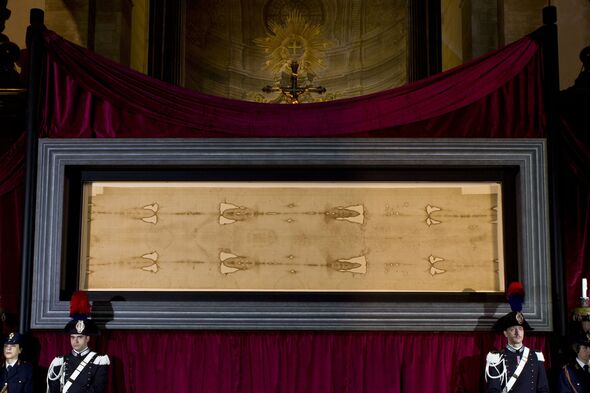
The fibers used are now thought to have originated from the Indus Valley region of ancient India.
“The presence of 38.7% of the total human genomic data from Indian lineages is surprising,” the investigators commented further. “The occurrence of an exceptionally high number of human heteroplasmies and the coexistence of different mtDNA [mitochondrial DNA] variants confirm that the Shroud encountered numerous individuals, thereby undermining the possibility of identifying the Shroud’s original DNA.”
The day’s biggest headlines in UK and World news and more Subscribe Invalid email
We use your sign-up to provide content in ways you’ve consented to and to improve our understanding of you. This may include adverts from us and 3rd parties based on our understanding. You can unsubscribe at any time. Read our Privacy Policy
Scientists suggest two potential explanations for this genetic mélange – either it results from centuries of handling, which has left behind traces of human skin bacteria, or it indicates linen imported by the Romans from territories near the Indus Valley.
Experts maintain a reserved stance regarding definitive conclusions. While the investigation opens new avenues for comprehending the artifact, it does not definitively establish whether the shroud is authentic or a later replica.