

Conservationists are rejoicing over the hatching of 105 kākāpō chicks during the 2026 breeding season — the highest tally documented in the 30 years such records have been kept.
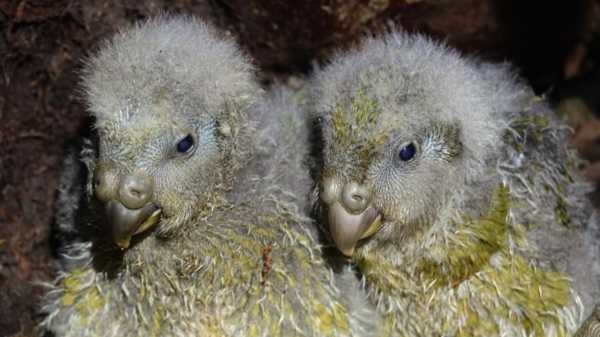
Two sibling chicks that hatched during this year’s breeding season.(Image credit: Sarah Manktelow/DOC)Subscribe to our newsletter
A bird species on the brink of extinction just 30 years ago has now achieved a significant milestone: The kākāpō preservation initiative in New Zealand has celebrated the hatching of 105 kākāpō eggs. This represents the highest number recorded since documentation began three decades ago, as reported by New Zealand broadcaster RNZ.
In an updated count of young birds released on April 3, representatives from New Zealand’s Department of Conservation announced that 105 kākāpō chicks emerged from 256 eggs laid. Currently, 98 of these young birds are still alive. One egg is presently being incubated.
This success suggests that the species, which reproduces every two to four years, might be experiencing a resurgence. The kākāpō (Strigops habroptilus) is a flightless parrot facing critical endangerment, found exclusively in New Zealand. It holds the distinction of being the world’s most rotund and heaviest parrot, with males reaching weights of up to 8.8 pounds (4 kilograms).
Declines in kākāpō populations were drastic due to hunting, habitat degradation, and the introduction of invasive predators, bringing the species perilously close to extinction in the 1990s.
These birds reproduce infrequently, typically every two to four years, and most females produce only a single chick per breeding period, exacerbating their vulnerability. The current estimated wild population stands at approximately 235 kākāpōs.
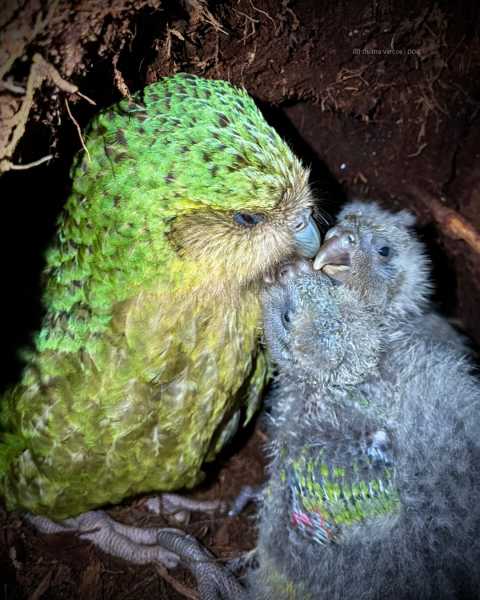
A kakapo chick with its mother in a nest. (Image credit: DOC)
However, not all the newly hatched chicks are expected to survive. Sarah Manktelow, a ranger with the Kākāpō Recovery Programme, informed RNZ’s Kākāpō Files podcast that seven chicks have unfortunately passed away, and four have been transferred to Dunedin Wildlife Hospital for medical attention. Kākāpō chicks are classified as adults once they reach 150 days of age, which is anticipated in mid-July.
The definitive chick count for the current breeding season will be finalized at that time. The eldest chick is currently over 50 days old.
“Each new chick brings the species closer to recovery from the brink of extinction,” stated Deidre Vercoe, the Department of Conservation’s operations manager for kakapo, in comments to Mongabay. “There is consistently a feeling of hope and optimism for the future.”
Curious about avian knowledge? Test your expertise with our bird-themed quiz!