

Also referred to as “volcano snails,” these gastropods develop a metallic, scaly shell and possess an exceptionally large heart, aiding their survival in deep-sea environments with low oxygen levels.
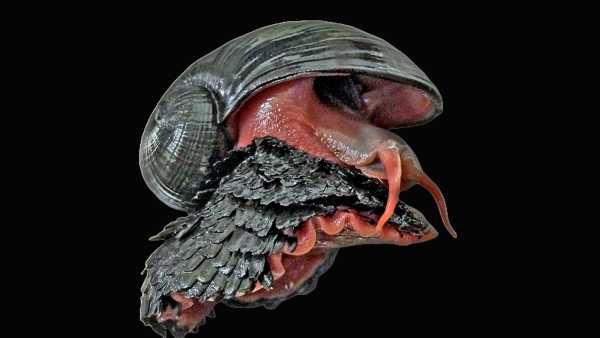
The scaly-foot snail boasts an iron-infused, scaled exterior. (Image credit: HKUST)Subscribe to our newsletter
The volcano snail, also known as the scaly-foot snail, exhibits a distinguishing feature among gastropods: a protective layer on its foot composed of hundreds of overlapping scales enriched with iron. It reinforces these scales with minerals extracted from the superheated liquids expelled by hydrothermal vents and black smoker chimneys in the depths of the Indian Ocean, where water temperatures can soar to 752 degrees Fahrenheit (400 degrees Celsius).
Within the snail’s scales, sulfur interacts with iron ions to create iron sulfide nanoparticles. The snail’s defenses are further enhanced by an external layer of iron sulfide on its shell, making it the sole known multicellular creature to fortify its skeleton with iron. When a pair of specimens were acquired by the National Museum of Wales in 2015, curators were advised to refrain from using water in the preservative solution to prevent the snails from corroding.
Beneath its formidable armor, the scaly-foot snail harbors a substantial heart—the largest in the Animal Kingdom proportionally to its body size—constituting approximately 4% of its total body volume. In oxygen-depleted waters, this substantial heart also facilitates oxygen delivery to the symbiotic bacteria residing within the snail’s esophageal gland, which function as an internal nutrient source. These snails, typically measuring about 2 inches (5 centimeters) in shell length, are sometimes likened to “sea pangolins” due to their resemblance to the armored land mammal.
Each individual possesses both male and female reproductive organs. They traverse the seabed at depths of approximately 1.7 miles (2,780 meters) and are documented in only three hydrothermal vent fields located east of Mauritius, an island situated off the southeastern coast of Africa.
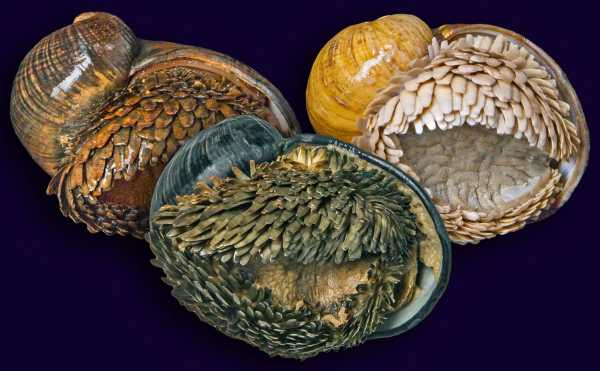
Scaly-foot snails possess the largest hearts relative to their body size among all known creatures on Earth. (Image credit: Chong Chen, CC BY-SA 3.0, via Wikimedia Commons)
While the potential range for these snails spans approximately 0.1 square miles (0.3 square kilometers), their currently inhabited areas cover only about 0.008 square miles (0.02 sq km). However, even this minuscule portion of the deep ocean is becoming increasingly perilous for the snails due to human interventions.
In 2019, the scaly-foot snail was designated as “endangered” by the International Union for Conservation of Nature (IUCN), becoming the first animal to receive this status due to threats posed by deep-sea mining activities at two of its three known habitat locations.
TOPICS