

A ‘Moon Base User’s Guide’ has been released by NASA, revealing significant deficiencies that the agency and its collaborators must address to establish a presence and reside on the moon.
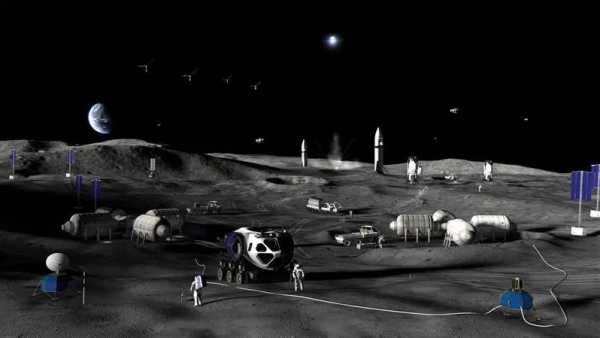
NASA is seeking to expedite its lunar endeavors and establish a lasting base on the moon, though this presents considerable challenges. (Image credit: NASA)Subscribe to our newsletter
NASA has issued a “Moon Base User’s Guide,” which outlines the numerous obstacles the agency must surmount to execute 73 projected lunar landings and construct a permanent base on the moon.
The nine-page document, released on April 6, provides a fundamental list of objectives NASA must accomplish to realize the “nearly impossible” space ambitions announced on March 24 during the agency’s “Ignition” event.
NASA intends to conduct a high volume of robotic and uncrewed lunar missions, aiming for 21 landings on the moon within the next three years alone, to pave the way for its $20 billion moon base and prepare for the inaugural crewed missions scheduled for 2028. The space agency has also indicated plans to launch a nuclear-powered “Freedom” spacecraft to Mars by the same year.
While the recent splashdown of Artemis II’s crewed lunar flyby demonstrated NASA’s continued capability to send humans to the moon, the Moon Base User’s Guide clearly highlights substantial gaps in NASA’s present capabilities. These limitations encompass aspects of landing systems, habitation modules, and power generation systems – essentially, everything required for humans to land and subsist on the moon.
If this endeavor sounds ambitious, NASA Administrator Jared Isaacman appears to concur. Speaking to attendees at the 2026 Space Symposium in Colorado Springs on April 14, he stated that NASA performs best when “undertaking and achieving the near impossible,” as reported by Space.com.
“We aim to land a multitude of assets, and it’s acceptable if some of them falter,” he remarked. “We will gain valuable insights.”
The Moon Base User’s Guide is part of a broader restructuring of American space initiatives. In recent years, NASA has encountered difficulties in returning astronauts to the moon, a prerequisite for eventual human missions to Mars. Despite the success of Artemis II, the Artemis program has exceeded its budget, costing over $100 billion to date, and is behind its original schedule, which had targeted a crewed moon landing in 2024.
Isaacman, who assumed his position in December 2025, is focused on accelerating lunar activities to fulfill NASA’s objectives for both the moon and Mars. This strategic shift includes discontinuing work on humanity’s first lunar space station, the Lunar Gateway, to prioritize establishing a surface presence on the moon. To facilitate this, the Artemis program has been reorganized to incorporate a second crewed lunar landing mission in 2028, alongside an increase in launch and landing frequency.
The guide was followed by a White House memorandum on April 14, stipulating that “NASA will, within 30 days of this memorandum, initiate a program to develop a mid-power space reactor with a lunar fission surface power (FSP) variant ready for launch by 2030, and an option for a space variant for a nuclear electric propulsion (NEP) demonstration.”
The context for this strategic realignment, beyond the escalating costs and delays of Artemis, is the burgeoning new space race. China is poised to challenge U.S. leadership in space exploration, with aspirations to land its own astronauts on the moon before 2030. Both nations are targeting the same lunar south pole regions rich in hydrogen fuel.
How to establish a lunar base
NASA’s planned 73 lunar landings will be executed in three distinct phases, as detailed in the Moon Base User’s Guide and prior Ignition documents. While the exact number of crewed missions remains unspecified, NASA has indicated a commencement with a rapid sequence of robotic and initial uncrewed missions, with routine crew rotations anticipated by Phase 3.
Phase 1 will involve 25 launches and 21 landings to ensure consistent and dependable access to the lunar surface. This phase is projected for completion by 2029, according to NASA’s Building the Moon Base plans, released on March 24.
Phase 2, slated for the period between 2029 and 2032, will encompass an additional 27 launches and 24 landings, focusing on the establishment of the initial moon base infrastructure and semi-annual crewed missions. Phase 3, extending from 2032 to an unconfirmed future date, will feature another 29 launches and 28 landings to develop uncrewed cargo return capabilities and sustain a continuous human presence on the moon.
Naturally, this undertaking is significantly more complex than it sounds. NASA famously landed humans on the moon during the Apollo missions over fifty years ago. However, constructing a base at the moon’s south pole presents a multitude of additional challenges, beginning with fundamental requirements such as a reliable power source.
“The Moon Base elements and development will occur in the lunar South Pole region, which has an incredibly different lighting environment than the equatorial maria and highlands visited by Apollo,” NASA stated in the document. “At the Moon Base, the Sun will remain low on the horizon, casting dramatic shadows that hinder solar electricity generation and subject systems to prolonged periods of extreme cold and dark.”
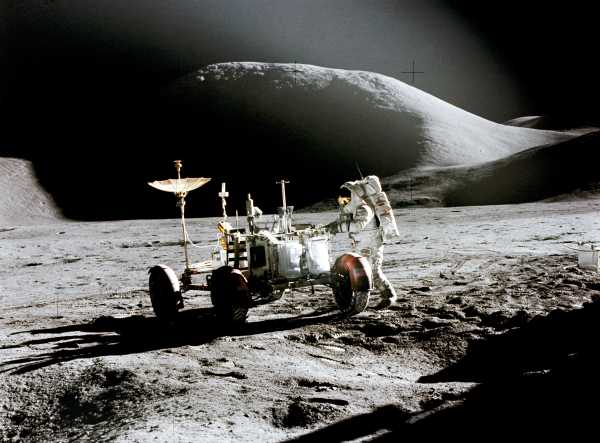
NASA has not dispatched humans to the lunar surface since the Apollo era. The image shows astronaut James B. Irwin operating the Lunar Roving Vehicle on the moon during the Apollo 15 mission in 1971. (Image credit: NASA)
NASA requires precise understanding of illumination conditions and solar array efficiency to devise appropriate solar power solutions. These solutions must also possess the resilience to withstand contact with sharp, electrically charged lunar dust.
The document further specifies that NASA needs detailed environmental data of the moon and systems capable of functioning within it to utilize its radioisotope thermal generators—nuclear batteries that produce both heat and electrical power. NASA’s long-term energy strategies also include the construction of a nuclear reactor on the moon.
The sheer frequency of planned lunar landings presents its own set of difficulties. For instance, the document highlights NASA’s need to develop precision landing systems capable of accurately gauging the altitude over low-visibility terrain, along with effective hazard avoidance systems. Some of the identified gaps in power and landing technologies are categorized as architecture-driven technology deficiencies, necessitating “entirely new technologies or significant advancements in performance” of existing ones, according to the guide.
Additionally, there are less emphasized unknowns within the document, such as the human body’s physiological responses to prolonged exposure to the lunar environment. These encompass the effects of lunar dust, microgravity, and carcinogenic cosmic radiation, in addition to logistical complexities related to life support, physical conditioning, and nutritional requirements.
NASA asserts that it is actively working to address the numerous technological and data deficiencies outlined in the document. It also emphasizes “Mars-forward” considerations, which pertain to the advancements NASA must achieve through its lunar program to realize its ultimate objective of landing humans on Mars.
The Mars-related considerations include gathering data on astronaut health in deep space and developing lunar surface nuclear power systems. These nuclear systems are deemed beneficial for constructing similar infrastructure on Mars and will aid in the advancement of NASA’s planned nuclear-powered spacecraft, as detailed in the document.
Ultimately, only time will reveal NASA’s capacity to achieve its ambitious objectives, but recent history offers little support for the space agency’s aspirations. Merely two days after the historic launch of Artemis II on April 1, the White House unveiled a budget proposal that included a 23% reduction in NASA’s funding, amounting to approximately $5.6 billion.
Furthermore, while NASA projects a $20 billion budget for its moon base construction, the estimated average cost of a single Space Launch System rocket stands at $2.5 billion.
TOPICS
Sourse: www.livescience.com