

in News
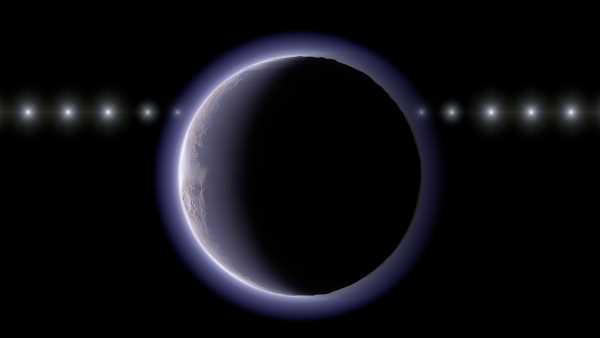
An artist’s rendering of an icy object with an atmosphere with a star passing behind it.(Image credit: NAOJ)Share this article 0Join the conversationFollow usAdd us as a preferred source on GoogleSubscribe to our newsletter
Scientists have identified an atmosphere around a frigid celestial body beyond Pluto’s orbit, an occurrence that was not anticipated, prompting a call for further investigations.
A team of Japanese researchers has gathered evidence pointing to a tenuous atmosphere enveloping the body, which resides in the Kuiper Belt in the frigid outer regions of our solar system, as detailed in a new publication released on May 4 in the journal Nature Astronomy.
These recent findings challenge the established notions regarding which celestial bodies can sustain atmospheres in our solar system. However, these preliminary discoveries necessitate validation by external researchers, with some specialists eager to conduct follow-up studies using the James Webb Space Telescope (JWST) to confirm the atmosphere’s existence.
“This is a remarkable discovery, but it critically requires independent confirmation,” stated Alan Stern, a planetary scientist and the lead investigator for NASA’s New Horizons mission to explore Pluto and the Kuiper Belt, who was not involved in the recent research, to the Associated Press. “The implications are significant if it is verified.”
Oddball ice ball
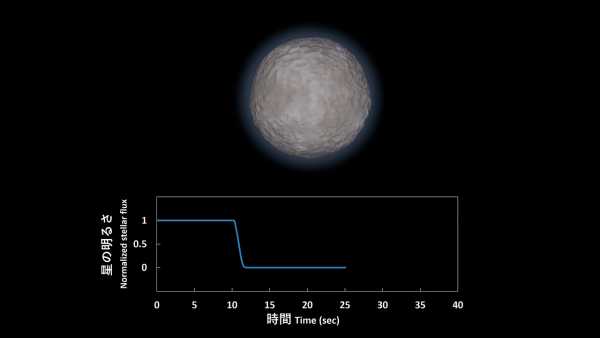
Researchers observed (612533) 2002 XV93) as it moved directly in front of a distant star in January 2024. These observations were conducted by a collective of professional and amateur astronomers from three locations across Japan. Their collected data suggested an attenuation – a gradual dimming of starlight attributed to an atmosphere, according to the study.
“The observational data indicated a smooth modulation in the star’s luminosity near the edge of the occultation, persisting for approximately 1.5 seconds,” explained Ko Arimatsu, the study’s lead author and an associate professor at the National Astronomical Observatory of Japan, to CNN. “This type of gradual luminosity shift is readily explained if the starlight was refracted by a very thin atmosphere surrounding the object.”
Conceptual video for Arimatsu et al. (2026) – YouTube
Watch On
The team’s findings indicated that the atmosphere is exceptionally thin, estimated to be between 5 million and 10 million times less dense than Earth’s atmosphere, rendering it incapable of supporting life. Furthermore, this potential atmosphere is not enduring, with projections suggesting it would dissipate in under 1,000 years unless replenished with gases.
Related stories
- NASA shuts off another Voyager 1 instrument as humanity’s most distant spacecraft prepares for risky ‘Big Bang’ maneuver to save power
- ‘A measurable, enormous global impact’: Astronaut Chris Hadfield on why the true power of Artemis II could take decades to hit
- Scientists detect an enormous halo around the iconic Sombrero Galaxy — Space photo of the week
This revelation prompts inquiries into how an atmosphere could have formed around this small, cold world. Prior JWST observations have shown that the object’s surface does not appear to possess any frozen gases that could sublimate and generate an atmosphere. The researchers hypothesize that the atmosphere might be sustained by cryovolcanoes (ice volcanoes), with some unforeseen event expelling gases to the object’s surface.
An alternative hypothesis is that the object experienced an impact with another icy body, such as a comet, which subsequently released gases to form an atmosphere. Future observations, particularly those conducted by the JWST – an infrared telescope designed to investigate atmospheres around exoplanets – could aid in resolving this enigma, according to Arimatsu.
“This underscores the significance of ongoing monitoring,” Arimatsu informed the Associated Press. “If the atmosphere diminishes over the subsequent years, it would support an impact-related origin. If it persists or fluctuates seasonally, it would lean more towards a continuous internal gas supply.”
Test your knowledge of our planetary neighborhood with our solar system quiz!
Sourse: www.livescience.com