

en
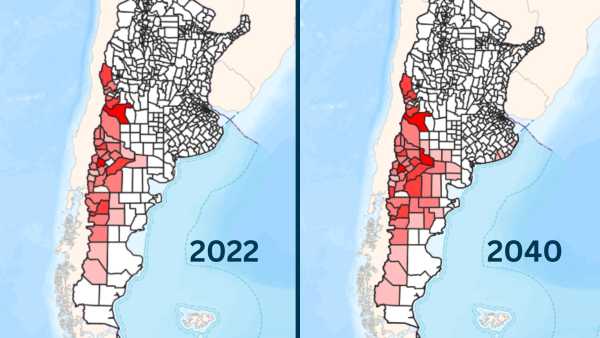
The distribution range of the long-tailed pygmy rice rat in 2022 versus its anticipated range for 2040.(Image credit: Pinotti, J. D., Ortiz, N., & Andreo, V. (2024). Riesgo de contacto con roedor Oligoryzomys longicaudatus en 2022. In Elaboración de mapas de riesgo por hantavirus para escenarios futuros de cambio climático en Argentina. Programa EUROCLIMA. Retrieved May 11, 2026, from https://simarcc.ambiente.gob.ar/)Share this article 0Join the conversationFollow usAdd us as a preferred source on GoogleSubscribe to our newsletter
The changing climate is poised to alter the habitats of rodents that carry viruses, potentially elevating the likelihood of zoonotic spillover events, where pathogens transfer from animals to humans.
This shift could expose populations to illnesses they have not previously encountered and heighten the probability of disease outbreaks, scientists caution.
With a case fatality rate reaching up to 50%, HCPS is regarded as one of the most severe forms of hantavirus disease, whereas infections in Europe and Asia generally have lower mortality rates.
Climate change is affecting rodent host populations
Researchers investigating hantavirus risks in southern South America have identified 11 genotypes associated with human illness across 13 native rodent species, stated Juan Diego Pinotti, a postdoctoral researcher affiliated with Argentina’s National Council of Research, based at the Institute of Animal Diversity and Ecology at the National University of Córdoba. Each viral strain has co-evolved with a specific rodent species, allowing that species to harbor the virus without exhibiting illness.
The natural “reservoir” for the Andes virus, the long-tailed pygmy rice rat (*Oligoryzomys longicaudatus*), typically inhabits the humid forests and shrublands of the southern Andes in Chile and Argentina. The virus transmission to humans primarily occurs through contact with the urine, feces, or saliva of an infected rodent.
Climate projections indicate that evolving weather patterns over the coming decades might extend the long-tailed pygmy rice rat’s territory eastward, towards Argentina’s Atlantic coast, where the majority of the nation’s population resides.
“More extensive surveillance and diagnostic efforts are required across various provinces, as the virus may be migrating into new regions without our awareness,” Pinotti, who contributed to the model development, informed Live Science.
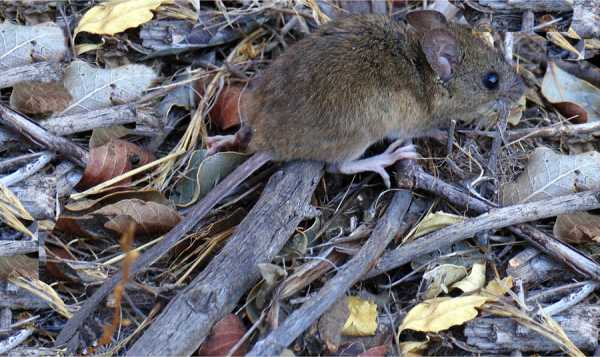
The long-tailed pygmy rice rat (*Oligoryzomys longicaudatus*) serves as the animal “reservoir” for the Andes virus.
(Image credit: Yamil Hussein E. via Wikimedia Commons, CC BY-SA 3.0)
El Niño-La Niña cycles may further reinforce this trend. During El Niño years in central and southern Argentina, increased rainfall typically promotes vegetation growth, providing rodents with abundant food and shelter, thereby fostering rapid population expansion.
“This, in turn, interacts with the winter conditions,” noted Veronica Andreo, a researcher for Argentina’s National Council of Research, employed at the Gulich Institute. “If the winter is harsher, fewer rodents may survive. Conversely, if it’s milder, a larger number of rodents can endure and reproduce in the following season.”
Beyond hantavirus: other viruses on the rise
A recent investigation into a different category of rodent-borne viruses, known as arenaviruses, yielded comparable findings. New World arenaviruses, encompassing viruses like Guanarito virus in Venezuela and Colombia, Machupo virus in Bolivia and Paraguay, and Junin virus in Argentina, can induce severe hemorrhagic fevers requiring high rates of hospitalization. Case fatality rates vary from approximately 5% to 30%, contingent upon the specific viral strain and the patient’s general health and access to medical care.
Scientists utilized machine learning to forecast how climate projections, evolving rodent populations, and land-use changes by humans might influence the distribution and transmission of arenaviruses in South America over the subsequent 20 to 40 years. Their findings suggest that climate-driven alterations in temperature and precipitation, combined with agricultural expansion, are likely to increase the risk of pathogen spillover as viruses spread into novel territories.
The researchers aim for these models to assist public health authorities in recognizing the necessity of preparing for outbreaks of these diseases as climate change instigates more extreme weather phenomena.
Always the most important thing is prevention — epidemiological surveillance and education of the population.
Juan Diego Pinotti, postdoctoral researcher for Argentina’s National Council of Research
“These are diseases with significant impact, yet they receive relatively little attention in terms of ongoing research or prioritization by public health officials,” remarked lead study author Pranav Kulkarni, a veterinary epidemiologist at the University of California, Davis (UC Davis) Weill School of Veterinary Medicine.
Notably, the Centers for Research in Emerging Infectious Diseases, a division of the U.S. National Institutes of Health, would have been engaged in researching these pathogens but ceased operations last year.
Continued surveillance is critical
As the climate continues to reshape disease risk landscapes, data collection and ongoing surveillance will be indispensable for enhancing preparedness against outbreaks. Improved regional collaboration and data sharing could enable countries to identify emerging hotspots sooner and establish more effective public health interventions, according to Kulkarni.
“If we can establish such infrastructure, particularly in nations likely to be affected, it would facilitate more robust modeling, more precise predictions, and a more informed approach to developing health policies,” Kulkarni shared with Live Science.
Further investigation is necessary to fully comprehend the spectrum of viral genotypes and rodent species present in South America’s southern cone, stated Andreo. “We still need to understand the intricate interactions between the various reservoirs and viruses, and ascertain if viruses can transfer from one reservoir to another,” Andreo told Live Science. Certain New World hantaviruses, such as the Laguna Negra and Lechiguanas genotypes, are known to possess multiple reservoirs.
Related stories
- 32 diseases you can catch from animals
- Earliest evidence of humans catching disease from animals dates to 6,500 years ago
- The deadliest viruses in history
Moreover, two novel hantavirus genotypes have been identified in Argentina in recent years, Pinotti added.
“The paramount importance always lies in prevention — implementing epidemiological surveillance and educating the public,” Pinotti communicated to Live Science. However, funding reductions in Argentina’s health and scientific sectors have compromised disease surveillance programs, research capabilities, and the ability to conduct extensive, long-term studies on zoonotic and vector-borne diseases.
“When these teams experience a reduction in their operational capacity,” Andreo commented, “the entire early warning system that enables the detection of outbreaks before they escalate becomes weakened.”