

in News
Some cancers are unresponsive to immunotherapy. An established asthma medication may offer assistance, according to preliminary findings.(Image credit: koto_feja via Getty Images)Share this article 0Join the conversationFollow usAdd us as a preferred source on GoogleSubscribe to our newsletter
A widely used asthma treatment could potentially be adapted to combat difficult-to-treat cancers, including triple-negative breast cancer, as suggested by early-stage research.
The investigation reveals that cysteinyl leukotriene receptor 1 (CysLTR1), a protein present on numerous cells, might be exploited by tumors to transform crucial immune cells into dormant agents that benefit the cancer rather than opposing it. These immune cells, known as neutrophils, would typically engage in directly eliminating tumor cells, aiding in the mobilization of other immune cells against the cancer, or amplifying the efficacy of specific cancer therapies.
Should the findings of this new study be substantiated by subsequent investigations, an existing pharmaceutical could provide a method to target this receptor, thereby overcoming cancer’s resistance to common immunotherapies. A drug capable of inhibiting CysLTR1, known as montelukast, is already available and has been historically employed in managing asthma and allergies.
The work implies that “you can repurpose these drugs to revive or to reprogram those neutrophils to become immune stimulatory cells that basically sensitize tumors to immunotherapy,” according to Dr. Bin Zhang, a professor of cancer immunology at Northwestern University Feinberg School of Medicine and a co-author of the study. The research, published on Tuesday, May 19, in the journal Nature Cancer, may also shed light on why certain patients do not respond to immunotherapy, a treatment designed to redirect the immune system’s response towards cancerous cells.
“There are not many options available for patients who are resistant [to immunotherapy],” Zhang stated. “But now, using this drug, it seems like they [could] start to respond to the treatment.”
Immune cells enlisted by the dark side
CysLTR1 is a key player in immune responses; for instance, it aids in attracting immune cells to an infection site and stimulates the lungs to produce mucus and expel any invading pathogens.
The difficulty arises when this reaction becomes excessive. In asthma, blocking CysLTR1 can yield significant benefits, alleviating symptoms such as wheezing, shortness of breath, and allergy-induced nasal discomfort. The medication montelukast achieves this and has received approval from the Food and Drug Administration (FDA) since 1998 for treating asthma and hay fever.
The current research proposes that CysLTR1 can also be commandeered by tumor cells to induce neutrophils to exhibit “tumor-promoting” characteristics. By releasing signaling molecules that alter the behavior of immune cells—cytokines and cysteinyl leukotrienes—tumor cells prompt neutrophils to secrete potent substances that facilitate the invasion of surrounding healthy tissue by cancer cells. They also assist tumors in evading attacks from other immune cells that would typically identify and help eradicate cancerous tissue.
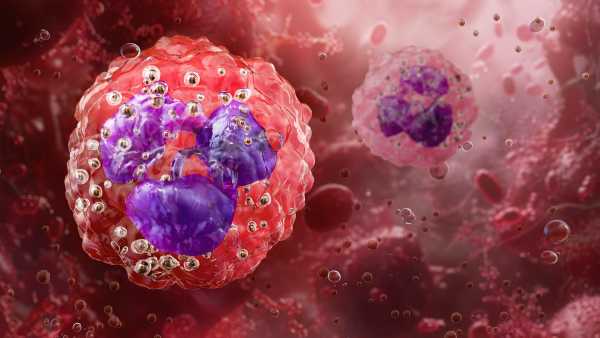
Neutrophils (pictured) are critical immune cells that can sometimes be hijacked by cancer.
(Image credit: RUSLANAS BARANAUSKAS/SCIENCE PHOTO LIBRARY via Getty Images)
“We identified this molecule plays a very important role in controlling neutrophils, which is one of the most abundant immune populations in the circulation, particularly in cancer patients,” Zhang commented.
When researchers inhibited CysLTR1 in laboratory mice, either by deactivating the gene or administering montelukast, they observed a reduction in tumor growth, an extension of the mice’s survival duration, and an enhanced response to immunotherapy drugs in tumors that were previously resistant.
The inhibition of CysLTR1 proved effective across various tumor types in mice, encompassing breast, colon, and melanoma-like cancers. Its efficacy was particularly pronounced when combined with a prevalent form of immunotherapy known as “checkpoint blockades,” leading to the regression of formerly resistant tumors under treatment.
This finding is significant because certain cancers, such as triple-negative breast cancer, generally exhibit poor responses to checkpoint blockades, Zhang noted. Based on preclinical models at least, it is suggested that the combination of checkpoint blockades and montelukast yields “beautiful results reflected by increased survival” across multiple cancer types.
“It’s a very amazing result,” he remarked.
Transforming science into therapy
In experiments involving human cells, the team discovered that blocking CysLTR1 in human blood diminished the capacity of neutrophils to impede cancer-fighting immune cells. It also prevented neutrophils from developing into this immune-suppressing, tumor-assisting state, indicating that the same pathway observed in mice is also active in humans. Through genetic analysis, the team elucidated the sequence of events initiated by CysLTR1 to transition into this “cancer-promoting” mode.
Subsequently, they uncovered evidence suggesting this same mechanism has left imprints in extensive cancer databases. They found that patients whose tumors exhibited higher levels of the receptor generally experienced poorer outcomes and showed reduced responsiveness to checkpoint blockades.
Shakti Ranjan Satapathy, a postdoctoral researcher at Lund University in Sweden specializing in this area but not involved in the current research, described the study as “important and timely” and stated that it “moves the field forward.”
Zhang expressed optimism regarding the team’s ability to initiate a clinical trial based on their findings. “It’s not easy, sometimes, doing a clinical trial, but in this case, it may be a little bit less challenging because those drugs are available,” he mentioned.
The team also proposes that physicians screen for this receptor to ascertain a patient’s likelihood of resisting immunotherapy. “We are probably the first to demonstrate [CysLTR1 as] maybe a functional biomarker that could be linked to the patient prognosis and help predict the immunotherapy resistance,” Zhang concluded. Nevertheless, extensive testing is required before this drug can be confidently implemented in cancer treatment, he advised.
Related stories
- Metformin may prevent severe morning sickness
- Migraine molecules may drive endometriosis pain. Existing drugs might help.
- Experimental drug doubles one-year survival in pancreatic cancer
“‘Quickly move into trials’ should not be confused with ‘ready for routine cancer treatment,'” Satapathy cautioned. “Repurposing an approved drug still requires an appropriate dose, dosing schedule, patient selection strategy, safety monitoring, pharmacodynamic readouts, and evidence of benefit in combination with immunotherapy.”
For instance, montelukast has been occasionally associated with significant neuropsychiatric adverse effects when used for hay fever, including suicidal ideation and mood alterations, prompting the FDA to issue a boxed warning in 2020. An alternative, Zhang suggested, might involve investigating whether the receptor could be targeted directly with an antibody, potentially leading to fewer side effects compared to a chemical compound, although further research will be necessary to determine if this is the appropriate course of action.
“Hopefully, we can have a real clinical impact,” he stated, “but that’s too early to say.”