in Opinion
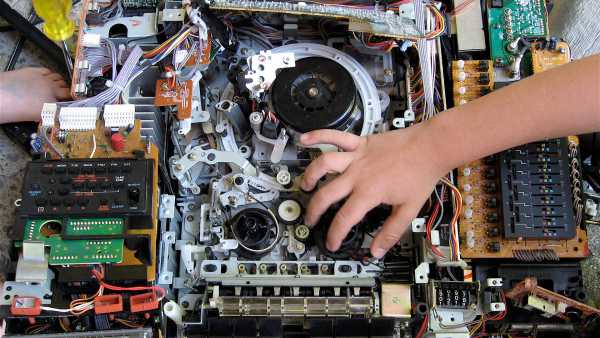
Betamax video recorders like this one helped set off a chain of events leading to bans on repairing your own devices.(Image credit: Steve Jurvetson/Wikimedia Commons, CC BY)Share this article 0Join the conversationFollow usAdd us as a preferred source on GoogleSubscribe to our newsletter
If you have ever attempted to fix an item, discovered it was beyond your financial or technical capabilities, and subsequently purchased a new one, you are not alone. For many decades, fixing electronics and home appliances has not been a practical choice in the United States, especially for devices incorporating proprietary software.
Absurd scenarios have become commonplace. The cost of a new printer can be comparable to replacing an ink cartridge. The U.S. Department of Defense faces restrictions in repairing the weapon systems it acquires due to intellectual property rights remaining with the manufacturer. John Deere, the agricultural equipment firm, denies farmers access to the necessary software for repairing their combines and tractors, as the purchase covers the physical machinery but not the associated software.
One repercussion, beyond the financial strain and consumer dissatisfaction, is environmental damage. The United States ranks as the second-largest generator of electronic waste globally, trailing only China, producing approximately 43 pounds (19.5 kg) of e-waste per person annually. A mere 25% of this electronic debris is recycled.
The right-to-repair movement emerged as a countermeasure, advocating for individuals’ ability to repair their purchased items, or to have third parties perform the repairs, without encountering undue financial, legal, or technical hurdles. The right to repair appears to be a rare area of bipartisan agreement in Congress. The Wounded Warrior Right to Repair Act—introduced in 2025 by a Democrat—and the Repair Act—introduced by a Republican—are two current legislative efforts aimed at establishing a federal legal framework to facilitate and reduce the cost of device repairs for American consumers. Both bills face strong opposition from industry associations.
As an American culture scholar, my research indicates that the roots of the legal and technical barriers to product repair stem from debates in the 1980s concerning new media and copyright protections.
Hollywood and VCRs
The swift adoption and popularity of video cassette recorders, or VCRs, in the late 1970s transformed films and television programs from ephemeral viewing experiences into tangible commodities for consumers. As I detail in my book, “Videotape,” despite the potential for additional revenue, Hollywood expressed concern over consumers’ ability to duplicate films onto videotape and attempted to hinder the technology. Today’s repair restrictions are a continuation of that narrative.
The initial U.S. copyright regulations were incorporated into the Constitution in 1790. Over time, the law was updated to encompass new technologies, but the fundamental intention remained consistent: to safeguard the financial interests of creators while ensuring sufficient public access to information for societal advancement.
Until the latter half of the 20th century, the American doctrine of fair use—which permits the unlicensed use of copyrighted works under specific circumstances—empowered judges to prevent copyright law from adversely impacting the public interest. Entities such as public libraries, book clubs, academic institutions, and news organizations benefited from this legal approach. The concept was formally integrated into American law through the Copyright Act of 1976.
When film studios initiated legal action against Sony in 1976 to halt the production and sale of video recorders, they contended that Sony’s product facilitated copyright infringement. However, the U.S. Supreme Court ruled in 1984 that recording television content for personal use did not constitute a violation of copyright law, thereby broadening the scope of fair use.
The industry subsequently shifted its focus to developing technological solutions for piracy and securing more stringent legal safeguards for its products.
They identified the digital versatile disc, or DVD, as a more secure alternative to VHS tapes. Initially, the DVD was exclusively a read-only format. It required several more years of development before affordable recording became feasible. Even then, the process was considerably more complex for users than recording onto videotape. In 1997, just a year after the video disc’s introduction, all member studios of the Motion Picture Association of America adopted the new format and began phasing out films released on videotape.
Why don’t companies want you to repair your stuff? – Aaron Perzanowski – YouTube

Watch On Copyright and virtual locks
Next came digital rights management. Collectively, this term encompasses the array of technological tools developed by the industry to govern user access to content. These include encryption software and various forms of authentication or enforcement software that restrict the types of digital activities users can undertake. For example, certain mechanisms prohibit the option to download or share a digital file.
The Digital Millennium Copyright Act, or DMCA, enacted into law by President Bill Clinton in 1998, provided the comprehensive legal framework that allowed these technological safeguards to extend far beyond entertainment, encompassing software as well. The DMCA reflected a new alignment of interests between the entertainment and software industries. It escalated existing penalties for online copyright infringement and criminalized any technology employed to circumvent technological protections. The law was passed despite warnings from critics at the time—and since—that it could impede innovation and raise costs for consumers.
Since 1998, an increasing number of consumer products, from toys to dishwashers, have incorporated microchips and proprietary software protected by copyright. Due to the Digital Millennium Copyright Act, third-party repair technicians are prohibited from modifying or bypassing proprietary software. Doing so would make them liable for infringing the manufacturer’s intellectual property rights, as seen with John Deere farm equipment. Some electronics are even engineered to prevent any form of tampering.
Manufacturers assert that only they or authorized personnel are capable of and should perform repairs on their products. These repairs are frequently very expensive. When the cost of repairing a product approaches the price of a new one, many consumers opt to purchase new items and discard the repairable ones.
Rising resentment over repair bansRelated stories
- Scientists observe metal repairing itself for the first time. Could Terminator robots be on the horizon?
- Scientists invent nanorobots that can repair brain aneurysms
- Self-healing ‘concrete batteries’ now 10 times better — they could one day power cities, scientists say
Technology tends to advance more rapidly than existing legal frameworks. With over 80% of Americans supporting the right to repair, it remains to be seen when, or if, American law will adapt to the unforeseen consequences of legislation intended to protect the intellectual rights of creative industries, but which is currently detrimental to consumers’ finances.
This adapted article is re-published from The Conversation under a Creative Commons license. Read the original article.
Sourse: www.livescience.com

