in News
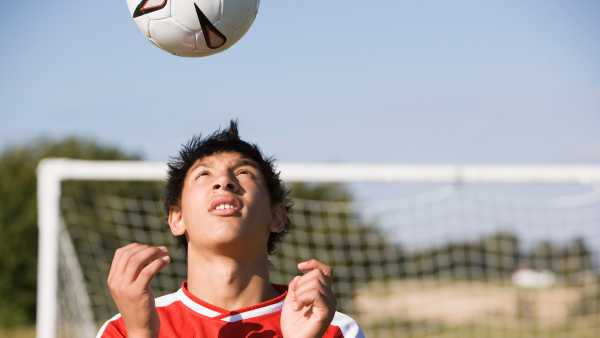
New research suggests indicators of neural damage in the bloodstream of soccer players who head the ball.(Image credit: BananaStock via Getty Images)Share this article 0Join the conversationFollow usAdd us as a preferred source on GoogleSubscribe to our newsletter
Even a single instance of heading a soccer ball may be sufficient to temporarily elevate proteins in the blood that are linked to brain cell injury, a recent study indicates.
For two out of the six proteins monitored, their concentrations increased in proportion to the frequency and force with which soccer players headed the balls. The study’s authors propose that this could signify acute brain injuries, though further investigations are necessary to ascertain whether the cumulative impact of heading might heighten a player’s susceptibility to neurodegenerative conditions like Alzheimer’s disease.
Within the research, documented on May 18 in the journal JAMA Neurology, investigators from Amsterdam University Medical Center observed that amateur soccer players who performed headers exhibited greater levels of the protein S100B in their blood immediately following a match, compared to those who did not. S100B, predominantly produced by star-shaped cells known as astrocytes, is commonly utilized to evaluate traumatic brain injury (TBI) and typically rises within an hour after a TBI.
Players who executed more than two headers, along with those who delivered multiple forceful headers, also experienced immediate elevations in a protein termed p-tau217. This protein stands out as one of the primary blood-based markers, or biomarkers, associated with Alzheimer’s disease.
Tau is a protein that typically supports the internal structure of neurons. However, mechanical stress on the brain’s communication pathways causes it to detach, and enzymes then modify the protein, transforming it into one of several forms of p-tau, including p-tau217.
The concentrations of p-tau217 and S100B reverted to their baseline levels within 24 to 48 hours post-match, but the study’s authors suggest this does not preclude the possibility of lasting damage.
“The current evidence points towards brain damage occurring from heading soccer balls, affecting both short and long-term health,” stated Samantha Bureau, assistant executive director of the Concussion Legacy Foundation Canada (CLFC), who was not involved in the new research. “Long-term effects are more challenging to document due to the time lag between exposure and symptom manifestation, but numerous studies have raised concerns about the potential risks linked to heading in soccer,” she communicated to Live Science via email.
This most recent investigation conducted in the Netherlands involved blood samples from 302 advanced amateur male soccer players collected across 11 matches — prior to, immediately after, and between 24 and 48 hours following each game. Although 86 participants declined the third blood collection, study co-author Marsh Königs, an assistant professor of developmental neuroscience at Emma Children’s Hospital at Amsterdam UMC, informed Live Science that this omission is unlikely to have impacted the findings. The study also utilized cameras to capture the frequency of headers performed by each player and to estimate the impact intensity of each header.
This represents a comparatively robust study, as it includes athletes from non-contact sports, thereby lending credibility to the conclusion that heading is the catalyst for the observed changes.
Peter Theobald, medical engineer at Cardiff University
Königs mentioned that the precise mechanism by which headers elevate the two biomarkers remains unclear. However, several potential explanations exist. The rapid acceleration and deceleration of the head could induce a “concussion-like” effect on a significantly smaller scale, Königs suggested. Another study, released in April, demonstrated that when a head impacts a ball, a pressure wave propagates through the head.
Irrespective of the exact process, scientists hypothesize that the consequences of heading accumulate over time, contributing to neurodegenerative conditions. A 2025 study revealed that years of repeated head trauma in soccer and football players result in neuron death and brain inflammation.
“The concern lies not with the rise in biomarkers itself, but rather with what this elevation signifies,” Königs commented. Furthermore, Königs anticipates that replicating the team’s study with elite professional soccer players would yield even more significant results.
Related stories
- CTE may originate from widespread inflammation and DNA damage
- Even minor concussions can ‘reconfigure’ the brain, potentially leading to lasting symptoms
- Can adults generate new brain cells? A new study might finally resolve one of neuroscience’s most enduring questions
Peter Theobald, a medical engineer spearheading research on brain biomechanics at Cardiff University who was not involved in the study, informed Live Science via email that soccer governing bodies, such as England’s Football Association, are implementing reductions in permitted heading practice loads, despite a lack of conclusive evidence that defines a “safe” limit for heading. He added that it is difficult to determine whether the biomarker concentrations detected in the Dutch study are substantial enough to warrant concern.
According to Königs, the observed elevations do not surpass the thresholds used in clinical settings for diagnosing injuries. However, he noted, “these cutoffs are primarily established to identify more severe injuries, such as serious brain trauma or dementia.” Königs expresses apprehension that repeated occurrences of this action, numbering in the hundreds or thousands, could lead to complications.
“This is a notably strong study, particularly because it includes athletes from non-contact sports, thereby reinforcing the conclusion that heading is the factor responsible for the changes observed,” Theobald remarked. “Observing the same players throughout an entire season would have been particularly insightful, as it would have allowed for the reporting of the cumulative effect of heading.”

