

MEMBER EXCLUSIVE
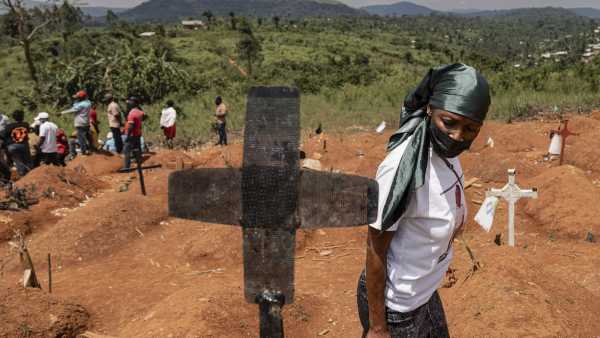
The current Ebola outbreak is attributed to the Bundibugyo virus.(Image credit: Michel Lunanga / Stringer via Getty images)Share this article 0Join the conversationFollow usAdd us as a preferred source on GoogleSubscribe to our newsletter
A devastating Ebola disease epidemic is rapidly unfolding in the Democratic Republic of the Congo (DRC) and Uganda. In May, the World Health Organization (WHO) declared the epidemic a public health emergency of international concern, highlighting a substantial risk of further international spread.
As of June 6, there have been 515 confirmed cases and 91 confirmed deaths in the DRC, according to the WHO, and 19 confirmed cases including two confirmed deaths in Uganda.
The outbreak is being caused by the Bundibugyo virus, one of three ebolaviruses recognized for causing significant outbreaks. In contrast to the Zaire ebolavirus, which was responsible for the largest Ebola epidemic to date, the Bundibugyo virus lacks a licensed vaccine or approved medicines.
To gain a deeper understanding of the outbreak and its global ramifications, Live Science engaged with Dr. Ali S. Khan, a professor of epidemiology at the College of Public Health, University of Nebraska, and a former assistant surgeon general of the U.S. Public Health Service.
Dr. Khan has been involved in 25 international and domestic disease outbreak responses, including multiple Ebola outbreaks, during which he worked in both the DRC and Uganda. He served as the director of the Office of Public Health Preparedness and Response at the Centers for Disease Control and Prevention from 2010 to 2014 and currently contributes to the WHO Steering Committee for the Global Outbreak Alert and Response Network.
Here are his insights regarding the Ebola epidemic and the future landscape of public health challenges.
Sophie Berdugo: This year’s outbreak currently ranks as the third-largest Ebola outbreak ever documented, progressing more rapidly in its initial phase than the significant outbreak in 2014. What factors have contributed to its magnitude?
Ali S. Khan: This outbreak is unfolding amidst a political and humanitarian crisis within the Democratic Republic of the Congo, specifically in an area marked by considerable ongoing political violence and persistent conflict. This situation presents substantial challenges. It’s a remote region, an impoverished area, with minimal to non-existent government services for healthcare or public health. Therefore, it is not surprising that an outbreak has emerged there. This marks the 17th outbreak recorded in the Democratic Republic of the Congo.
However, given its location, it was identified at a later stage, leading to multiple chains of transmission occurring before its detection. It was identified late enough that we are now observing what many would describe as “community transmission.” This is why the outbreak has become so extensive.

Dr. Ali S. Khan is currently serving as the dean of the College of Public Health at the University of Nebraska Medical Center.
(Image credit: University of Nebraska Medical Center)
Whether it is spreading more rapidly is a subject of discussion, as efforts are still underway to ascertain its full extent. It may appear to be spreading faster simply because all cases are being identified; it might have already spread more widely. This is not to say it won’t spread further, but the initial phase of the outbreak involves attempting to comprehend the number of cases, who is infected, and where they are located.
Fever and headache, along with muscle aches, are common initial symptoms in a country where malaria is prevalent. Therefore, it can be easily mistaken for other conditions. The sickness or death of healthcare workers serves as a critical indicator for diseases like Ebola.
In this particular instance, a crucial factor emerged when the outbreak was suspected: the initial diagnostic test employed did not detect Bundibugyo virus; it only tested for Ebola Zaire. Consequently, the initial diagnostic results suggested that it was merely another severe tropical febrile illness, not Ebola.
Subsequently, when the appropriate samples were sent to the Ministry of Health, which possessed more advanced testing capabilities, they were able to identify it: “It is Ebola; it’s just a different strain of Ebola.”
SB: Will this Bundibugyo outbreak require a different control strategy compared to previous Ebola epidemics?
AK: The response to an Ebola outbreak is consistent across all such outbreaks. It hinges on meticulous surveillance to identify cases, facilitate their admission to healthcare facilities to prevent further community spread, and ensure they receive excellent care. Additionally, robust infection control measures are vital to prevent transmission to other healthcare workers. That constitutes the primary step.
The subsequent step involves thorough contact tracing of infected individuals to locate them and ensure their humane quarantine. The third crucial element is ensuring safe burials. It is essential to guarantee that if individuals pass away within the community, their burials are conducted safely and with dignity.
These are the three essential components. Every Ebola outbreak response will implement these measures.
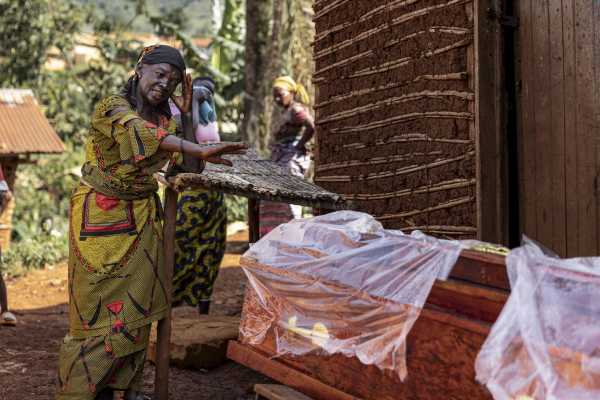
Safe and dignified burials are an essential element of Ebola outbreak response.
(Image credit: Michel Lunanga / Stringer via Getty images)
This outbreak presents challenges for two primary reasons. Firstly, with Zaire, we now have therapeutic drugs that can aid patients. For Bundibugyo, we do not possess comparable medications, making it more difficult in a healthcare setting to save lives.
Secondly, from a preventative standpoint, there are no vaccines available. While for Zaire, vaccinations are possible—for instance, inoculating healthcare workers or individuals who have been in contact with infected people to reduce their likelihood of infection—this is not an option for Bundibugyo.
Therefore, the response relies entirely on traditional public health methods, which are demanding during a humanitarian crisis. This is further complicated by a lack of trust in the government, which is already limited, and an additional deficit of trust towards international partners.
Let us recall that these populations experience daily deaths from preventable diseases like malaria, yet receive little attention. However, the moment an “exotic disease,” as perceived by the West, emerges, substantial financial resources and numerous medical responders appear. It is quite understandable why mistrust might arise in such circumstances.
Ultimately, the most significant factor in every outbreak is risk communication and community engagement. An outbreak can be brought under control swiftly if the community is actively involved, communication is effective, and they are willing to collaborate towards a resolution.
SB: Do you have any reservations about the current strategy the U.S. is employing for this outbreak? How might reductions in funding for the U.S. Agency for International Development (USAID) have worsened the situation?
AK: It is accurate to state that USAID has consistently been a crucial partner in these outbreaks, providing logistical support and essential personal protective equipment (PPE). Thus, there is no doubt that we have lost the on-the-ground connection that the U.S. government previously maintained with these outbreak responses.
That being said, we are aware that the U.S. is providing financial support for the response. The CDC and other partners have been collaborating with the WHO to help coordinate efforts, understand the evolving situation, and identify potential areas of assistance.
Global health security is intrinsically linked to domestic health security.
It is easier to assert this in principle than in practice, given the hundreds of partners involved during an outbreak. Pinpointing a specific failure due to the absence of a particular partner is challenging. Nevertheless, the absence of USAID will undoubtedly affect any outbreak where USAID has historically played such a vital role on the ground.
In the past, people have inquired, “If USAID had been present, would we have learned about this outbreak sooner?” In theory, yes, but there is no concrete evidence to support this claim. The reality is that this outbreak occurred amidst a humanitarian crisis, and the initial diagnostic testing failed to prompt an appropriate response. Furthermore, outbreaks of unexplained severe febrile illnesses are not uncommon in the DRC.
It is uncertain whether the cuts to USAID and other programs directly led to this outbreak. Such outbreaks are likely to occur, given the geographical region’s predisposition for them. The transmission from animals to humans is facilitated by limited to non-existent infection control measures within healthcare settings, leading to the inevitable spread of outbreaks.
SB: Building on that point, you mentioned in a 2020 interview that “a disease anywhere is a disease everywhere,” emphasizing the necessity of a global approach, as diseases can spread globally.
AK: Absolutely. We are concerned about these transboundary diseases for numerous reasons. One is the localized impact on communities. We are concerned about widespread national and regional dissemination, as observed with Ebola in 2014. And then, similar to SARS-CoV-2 [the virus causing COVID-19] or the next influenza virus, we are concerned about global propagation.
The most effective strategy for all of us as global citizens is to promptly identify diseases at their source and address them there to prevent their spread. This requires collaboration among multiple partners within communities and in conjunction with governments. This remains more critical now than ever due to the accelerated pace at which diseases can travel.
So, yes, a disease anywhere is a disease everywhere, but a disease anywhere today could be a disease everywhere tomorrow morning.
In current times, an individual could become infected in Bunia [the capital city of Ituri Province in the DRC] today and be in New York City by tomorrow evening. They might carry the virus internally but not exhibit symptoms for another week, making the hidden infection undetectable due to the incubation period. Our travel speeds have surpassed these incubation periods, which has proven detrimental to our ability to protect ourselves.
The traditional strategies of “locking down borders and restricting port access for ships”—these are no longer effective because the disease may have already arrived by the time such measures are considered.
SB: This Ebola outbreak was reported within weeks of a cluster of hantavirus cases occurring on a cruise ship. Are we heading towards a future where epidemics and potential pandemics become more probable?
AK: Yes, unequivocally. They are becoming more probable due to several factors. One is the increasing human encroachment into natural environments, which heightens the potential for human-animal interactions and subsequent spillover into human populations. This risk persists and is likely increasing.
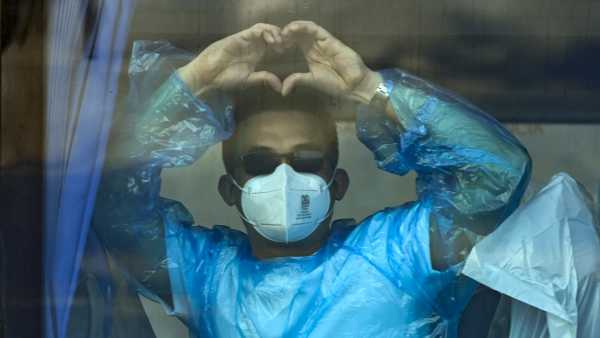
In May, the WHO were alerted to a cluster of hantavirus cases aboard a cruise ship.
(Image credit: Jorge Guerrero/AFP via Getty Images)
Climate change is also contributing significantly, as vectors such as mosquitoes, ticks, and rodents are migrating into new regions where they were previously absent, thereby increasing human exposure risks. This situation exacerbates existing challenges. Global travel further intensifies these issues, allowing infected individuals to reach distant locations more rapidly than ever before.
Furthermore, the reduction in global funding is not solely a U.S. issue; international development aid has also decreased from Germany and other European nations. Consequently, low- and middle-income countries face greater difficulties in establishing the necessary systems to promptly identify and report these diseases, enabling either self-management or the mobilization of international assistance.
SB: According to the WHO, it appears no vaccines will be available for approximately nine months. Is there a way to accelerate this timeline, either now or in the future?
AK: Yes, the solution lies in embracing mRNA technology and ceasing its stigmatization. No technology is faster than mRNA technology in developing vaccines. Nothing else comes close. Consider the remarkable speed at which the COVID vaccine received FDA approval in the United States: less than nine months, resulting in a licensed vaccine available in hundreds of millions of doses almost immediately.
We must adopt new technologies for vaccine development to enable rapid production and availability of vaccines the moment a new pathogen emerges. Unfortunately, in the United States, there has been a tendency to demonize mRNA technology, which is regrettable, as it holds the potential to be the key technology for developing rapid vaccines for future pandemics.
I understand that CEPI [Coalition for Epidemic Preparedness Innovations] in Europe has invested $10 million in mRNA technology for this new Bundibugyo strain. The other two vaccines currently under development utilize more conventional methods, which are established technologies being adapted.
SB: What does the U.S.’s handling of this outbreak reveal about its readiness for future ones?
AK: Globally, the U.S.’s withdrawal from the WHO, despite ongoing communication, has positioned the U.S. government outside the usual channels for information and coordination regarding pandemics. It’s important to clarify that communication with the WHO continues, as I know from my colleagues at the CDC.
The U.S. has historically been a leader in pandemic preparedness, having played a role in the establishment of the WHO. This decline in global leadership will undoubtedly impact our capacity for early detection and rapid response to diseases, thereby increasing the risk of transboundary diseases not only for us but for other nations as well.
RELATED STORIES
- Ebola can linger in brain fluid and trigger deadly relapse, monkey study suggests
- The deadliest viruses in history
- One molecule could usher revolutionary medicines for cancer, diabetes and genetic disease — but the US is turning its back on it
This message is not solely directed at the U.S.; it serves as a broader message to all countries that have recently become alarmed by a dozen hantavirus cases, which, as those in the field were aware, posed no threat of a global pandemic.
Communities naturally experience fear when confronted with reports of such “exotic diseases” that spread from person to person. It is therefore logical for governments to ensure their protection by acknowledging that global health security is also a component of domestic health security.
These outbreaks do not always originate in Africa and Asia; they could potentially emerge within the United States itself. Undeniably, public health authorities in the United States have been weakened since the COVID pandemic. The erosion of these public health infrastructures and the persistent spread of misinformation compromise our ability to effectively respond to the next pandemic.
Editor’s note: This interview has been edited and condensed for clarity.