in News
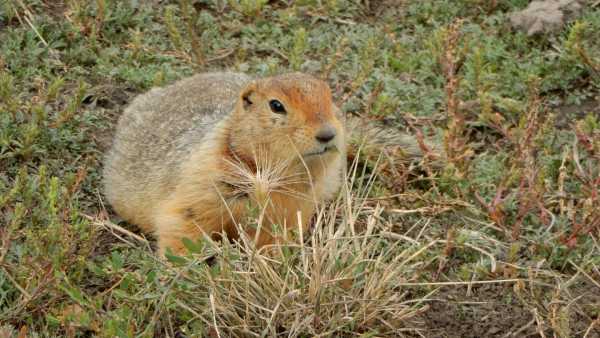
The ancient ancestors of Arctic ground squirrels (Urocitellus parryii) left behind fecal remains in the Yukon, preserved in permafrost for ages.(Image credit: Government of Yukon)Share this article 0Join the conversationFollow usAdd us as a preferred source on GoogleSubscribe to our newsletter
The frozen excrement of ancient ground squirrels is abundant with DNA from ice-age fauna, including woolly mammoths, an elusive large cat, and a vast array of other life forms, providing a remarkably detailed genetic record of prehistoric existence in Canada’s wild Yukon.
Although the genetic material of large fauna was discovered within the ground squirrels’ waste, these rodents were not predatory. They were indiscriminate omnivores that consumed a wide variety of plant matter and fungi, alongside insects, smaller rodents, and carrion, much like modern Arctic ground squirrels (Urocitellus parryii) inhabiting the Yukon Territory and other regions of northwestern North America and Siberia.
However, Arctic ground squirrels also have a tendency to gather and store various items in their dens, which may have introduced additional DNA into the droppings over extended periods, potentially accounting for some of the genetic signatures identified, the researchers noted. It is also conceivable that DNA from carnivores ended up in the dens as they attempted to hunt the squirrels, they proposed.
“The Arctic ground squirrels residing in the Yukon today behave somewhat like pack rats,” stated study lead author Tyler Murchie, a paleogenomics researcher affiliated with the Hakai Institute in British Columbia, Canada. “So they venture out into the landscape and collect a multitude of plant fragments and bones, seeds, and transport them back to their burrows.”
Therefore, whether these ancient rodents consumed carrion and other foodstuffs or simply brought them into their dwellings, these droppings offer insights into the flora and fauna that inhabited Beringia, an ancient landmass that once spanned northeastern Asia and northwestern North America when the continents were joined by a land bridge during the last glacial period. The findings were disseminated on Tuesday, June 9, in the journal Nature Communications.
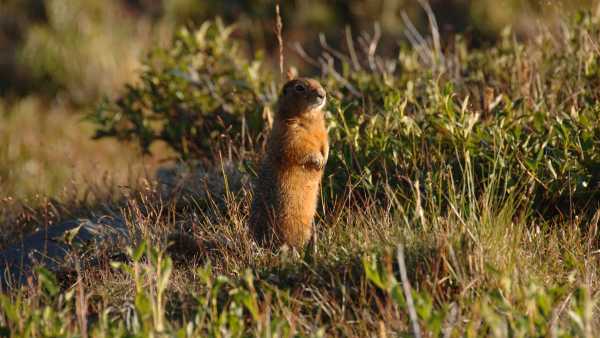
The coprolites, or fossilized excrement, analyzed in the study spanned numerous glacial epochs.
(Image credit: Government of Yukon)Poop detectives
For this research, the scientists examined samples extracted from fecal pellets that had been preserved for millennia within burrows located in the deep permafrost of the Yukon, a region bordering Alaska. These droppings, with the oldest specimens dating back approximately 700,000 years, have yielded an extraordinary wealth of ancient environmental DNA from a multitude of plant, microbial, fungal, and animal species.
Significantly, the genetic material sourced from the 700,000-year-old ground-squirrel droppings ranks among the most ancient DNA ever retrieved and sequenced, according to the study’s authors.
“This research demonstrates that ground squirrel coprolites, or their droppings, offer remarkably diverse genetic glimpses into ancient Beringia, establishing them as exceptional archives for comprehending evolutionary and ecological shifts throughout deep time,” stated study co-author Hendrik Poinar, who directs the Ancient DNA Centre at McMaster University in Ontario.
“It aids in reconstructing paleoenvironments over much greater timescales, providing insights into environmental transformations, megafaunal evolution, dispersal patterns, and ultimately, extinction events,” Poinar elaborated.
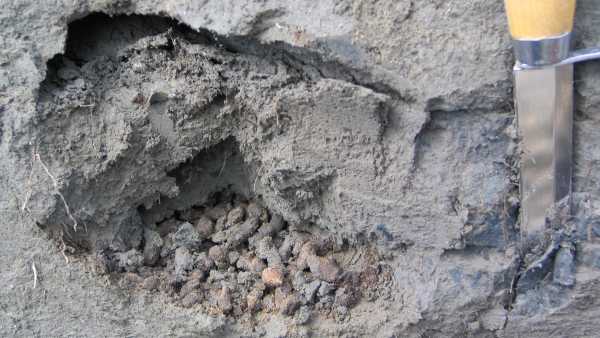
Ancient fecal pellets discovered in the Yukon’s Lower Quartz Creek, attributed to Arctic ground squirrels.
(Image credit: Duane Froese/University of Alberta)
During their examination, the researchers successfully extracted ancient environmental DNA from a collection of ground-squirrel coprolites. This process provided the team with ample quantities of well-preserved genetic material, enabling them to reconstruct over 18 mitochondrial genomes. These included those of woolly mammoths (Mammuthus primigenius), the now-extinct steppe bison (Bison priscus), horses (Equus), the snowshoe hare (Lepus americanus), and the Arctic ground squirrel itself.
A mitochondrial genome, often referred to as a mitogenome, represents the entire complement of DNA contained within mitochondria—minute structures inside cells responsible for energy generation. The mitogenome reconstructed from the 700,000-year-old sample marks the most ancient mitogenome ever recovered from fossilized feces, as reported in the study.
Related Stories
- ‘Wonderfully shaped feces’ found inside ancient fish skull. What left the pretty poops?
- 8 times fossilized human poop dropped big knowledge on us. (Number 2 will surprise you.)
- Dinosaur puke and poop help reveal how they took over the world
The research team also identified fainter genetic traces from a variety of other fauna within the coprolites, including indications of lemmings (Lemmus), caribou (Rangifer tarandus), gray wolves (Canis lupis), and a large cat—potentially a cougar or the extinct American cheetah (Miracinonyx trumani). Additionally, evidence of fungi, bacteria, and over 200 distinct groups of plants was detected.
Given the rich archive of genetic material that has been uncovered, these findings hold the potential to facilitate future breakthroughs, according to the researchers.
“The key takeaway I hope people derive from this type of research is the unexpected mysteries that can be found within remains that might otherwise be disregarded,” Murchie commented in a video statement.
How much do you know about Earth’s frosty past? Find out with our last ice age quiz!
TOPICS

