in News
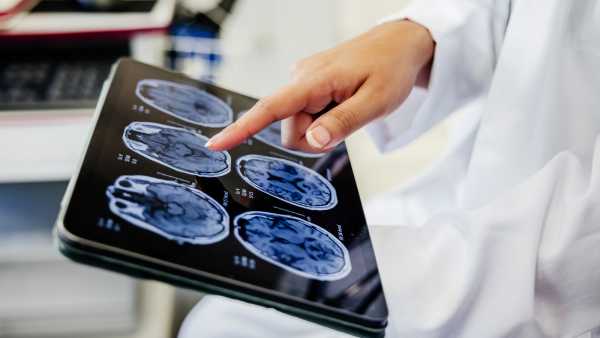
Researchers are hopeful their intervention could mitigate the extent of brain damage sustained after a stroke.(Image credit: Tom Werner via Getty Images)
- Facebook
- X
- Reddit
- Pinterest
- Flipboard
Share this article 0Join the conversationFollow usAdd us as a preferred source on GoogleSubscribe to our newsletter
Inducing a state resembling hypothermia through medication might decelerate brain tissue damage resulting from strokes, as suggested by a recent study involving animal subjects and human participants.
The investigation utilized two established medications: the antipsychotic chlorpromazine and the sedative promethazine, referred to as “C+P” when administered concurrently. This combination of drugs successfully induced hypothermia and offered protection to brain tissue in both mouse and monkey models simulating stroke conditions.
Furthermore, an infusion of C+P proved to be safe in an initial trial involving 32 human stroke patients, showing no significant adverse effects. Nevertheless, the paper detailing these findings, published on June 17 in the journal Science Translational Medicine, did not report any substantial enhancements in stroke recovery outcomes.
Further investigation is required to ascertain the potential benefits of C+P treatment for individuals affected by stroke. However, the research offers fresh insights into the metabolic mechanisms believed to underpin the therapeutic benefits of hypothermia, according to Dr. Eric Landsness, an assistant professor of neurology at the Washington University School of Medicine in St. Louis, who was not involved in the study.
“The exciting aspect of this research is that it clearly indicates the benefit stems not just from hypothermia, but from hypometabolism,” stated Landsness, who reviewed the manuscript prior to its publication.
Brain freeze?
The researchers explored C+P as a therapeutic option for acute ischemic stroke, a condition characterized by the obstruction of blood flow to a portion of the brain. Ischemic strokes constitute the predominant type, accounting for over 85% of all stroke cases. “Acute ischemic stroke” specifically denotes the critical medical event caused by a sudden cessation of blood supply to the brain, leading to a corresponding loss of neurological function.
When blood circulation is re-established through a procedure known as reperfusion therapy, “significant damage can result from numerous processes initiated during the period of ischemia,” explained Dr. Patrick Lyden, a professor of physiology and neuroscience, neurology, and neurosurgery at the University of Southern California Keck School of Medicine, who was not associated with the study.
To safeguard brain tissue from this dual threat of ischemia and reperfusion injury, some scientists have attempted to leverage hypothermia, which is recognized as “one of the most potent methods for brain protection we have ever investigated in laboratory animals,” Lyden informed Live Science. “It serves as the benchmark against which all other brain protectants are evaluated.”
During hypothermia, an individual’s body temperature falls below 95 degrees Fahrenheit (35 degrees Celsius). Under typical circumstances, this state can be perilous, as the reduced temperature can impair the heart and nervous system to the extent that the body’s vital cardiac and respiratory functions cease.
However, a leading hypothesis explaining the efficacy of hypothermia in a therapeutic context is its ability to decelerate metabolic processes, akin to the state observed in hibernating animals, Lyden remarked. “As metabolism slows, the cascade of cell death within the brain is also retarded.”
While therapeutic hypothermia can safeguard the human brain following cardiac arrest and is sometimes administered to newborns suffering from hypoxic ischemic encephalopathy (a condition where blood and oxygen supply to the brain is compromised around birth), studies involving hypothermia in adult stroke patients have yielded less conclusive results, Lyden noted.
Acute ischemic strokes harm brain tissue by interrupting blood supply to a section of the organ, but the re-establishment of blood flow can also induce damage.
(Image credit: Douglas Sacha via Getty Images)
The researchers put forth the hypothesis that the C+P approach might be a more effective method for reducing metabolic rates in stroke patients. In prior experiments, C+P demonstrated a reduction in neuroinflammation in rodent stroke models, potentially due to alterations in metabolic activity independent of hypothermia.
In the current investigation, the treatment was contrasted with two alternative strategies for lowering core body temperature in mice: a different medication, adenosine 5′-monophosphate, and external cooling employing cold water and ice packs. While all three methods successfully induced hypothermia in the mice, only the C+P intervention led to a decrease in their overall oxygen consumption and energy expenditure, which are key indicators of a reduced metabolic rate.
The publication emphasizes metabolism not merely as a secondary consequence of hypothermia, but as a process meriting dedicated study, according to Landsness.
In the mouse subjects, C+P therapy resulted in diminished glucose utilization by the brain and brown adipose tissue, which expends fuel to generate heat. The treatment was also linked to less brain tissue injury and reduced lactate accumulation, a factor that can accelerate cell death, following stroke. These outcomes were also observed in rhesus monkeys that received C+P.
Evidence from the limited safety trial conducted with humans suggests that the metabolic effects of C+P may also be present in people.
The researchers observed lower concentrations of proteins associated with metabolism in the bloodstream of patients who received the highest dosage of the tested treatment. These individuals were also the sole participants to experience a notable drop in body temperature four hours post-treatment, though their temperatures did not reach genuinely hypothermic levels. (In the mice and monkeys, temperatures did decline significantly.)
Related stories
- ‘We’re starting to find a lot more weirdness’: These strange animals can control their body heat
- Humans may have untapped ‘superpowers’ from genes related to hibernation, scientists claim
- Scientists may be able to put Mars-bound astronauts into ‘suspended animation’ using sound waves, mouse study suggests
In human participants, the C+P infusion did not lessen the degree of brain damage observed 72 hours after administration, nor did it influence the participants’ capacity to carry out daily tasks independently after 90 days. Concurrently with the C+P treatment, the patients had also undergone standard reperfusion therapies.
The study’s authors, affiliated with Capital Medical University in Beijing, did not provide a comment in response to Live Science’s inquiry. In their published work, they stated that subsequent trials could potentially confirm the protective efficacy of the C+P treatment in stroke cases.
While C+P did not induce significant adverse effects in the human subjects of the current study, Lyden expressed concern that the medications might still carry the risk of undesirable consequences. For instance, the two drugs could potentially interact in ways that provoke symptoms such as muscle spasms, seizures, or alterations in heart rhythm. Consequently, Lyden suggested, it might be more prudent to seek alternative medications that can still reduce metabolic activity without presenting these potential hazards.
To identify a substitute for the C+P regimen, researchers require a more precise understanding of how these drugs exert their effects. The current paper “coincidentally identified a drug [combination] that induces hypothermia and hypometabolism, but the underlying reasons are not necessarily clear,” Landsness commented. His research team is investigating the neural pathways involved in hypothermia and hypometabolism, which could reveal novel therapeutic targets.

