in Opinion

Can you distinguish between a scientific image created by a human and one generated by an AI model? (Image credit: Jesussanz/Getty Images)
- Facebook
- X
- Reddit
- Pinterest
- Flipboard
Share this article 0Join the conversationFollow usAdd us as a preferred source on GoogleSubscribe to our newsletter
A photograph of our planet Earth illuminated in the vastness of space, with the moon’s rugged edge extending across its foreground, captured the attention of many in April 2026. Spacefarers on NASA’s Artemis II expedition took the picture, and much like the iconic “Earthrise” image from Apollo 8, it resonated as profoundly genuine and inspiring to numerous individuals.
However, in an era where virtually anyone can produce a visually comparable image within moments using artificial intelligence from a simple text description, how do people determine an image’s authenticity?
The widespread circulation of AI-generated scientific imagery in public forums presents more than just a challenge of misinformation. As a researcher specializing in visual science communication and public confidence, I contend that it also contributes to a crisis of trust in science amidst the AI revolution, eroding the very tools scientists have long depended on to validate their visual work.
AI-generated imagery infiltrates science
AI technologies are already reshaping the creation, distribution, and public presentation of scientific visuals.
Professionals are employing these tools to develop illustrations, generate synthetic datasets, refine laboratory images, and produce educational and public outreach materials.
While AI can empower scientists to articulate complex concepts with greater creativity and efficiency, these same capabilities blur the distinctions between illustration, enhancement, and outright fabrication.
In 2024, two scientific publications faced retraction due to the inclusion of AI-generated figures depicting biologically implausible structures. By April 2026, the New England Journal of Medicine issued a retraction for a paper after it was discovered that a clinical image had been altered using AI. These instances have garnered significant public notice, yet they likely represent only a fraction of the actual occurrences. Experts have cautioned that AI-driven visuals pose escalating risks in disciplines heavily reliant on empirical visual evidence, such as materials science.
NEJM Images in Clincal Medicine from last week retracted due to AI image manipulation. Look at the numbers on the ruler🤦🏻♂️https://t.co/lafNw15Kao pic.twitter.com/c66u5ZX8PkMay 2, 2026
Academic publishing houses are starting to implement AI-detection software. Nevertheless, systems designed to identify artificial images will invariably trail behind those engineered to produce them. Many detection tools can only recognize image characteristics they have been trained on. As novel AI models emerge, developers must continually acquire fresh data and retrain their detection systems to keep pace.
The primary concern revolves around visuals that appear highly realistic, subtly misrepresenting scientific details while maintaining sufficient believability to pass initial scrutiny.
Trust in scientific imagery
For many years, scientific images commanded authority largely because their creation was arduous. Producing microscopic views, climate charts, and astronomical photographs necessitated costly apparatus, institutional backing, and specialized knowledge. The prevailing assumption was that such images reflected genuine observations, given the limited number of individuals capable of producing them.
Studies in science communication, including my own research, indicate that individuals assess scientific visuals using a few cognitive shortcuts. Does the image appear technically advanced? Does it originate from a reputable institution? Does it align with my existing beliefs? Generative AI is progressively undermining all three of these mental shortcuts, or heuristics.
Today, anyone can craft a sophisticated, science-like image by providing a text prompt. Furthermore, images often become detached from their original context when disseminated online. When visual quality and institutional attribution cease to be dependable indicators for judging the veracity of scientific images, people tend to revert to another mechanism: their pre-existing convictions.
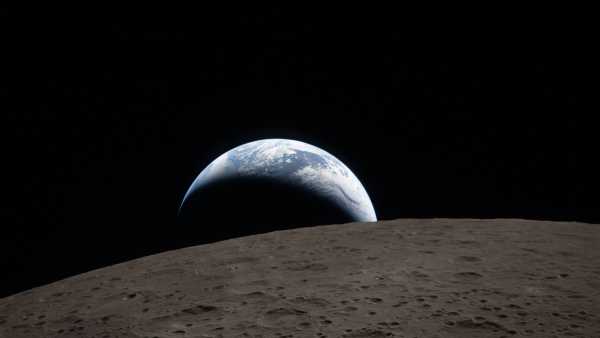
This depiction of Earth, captured during the Artemis II mission in April 2026, is indeed authentic. But does everyone perceive it as such?
(Image credit: NASA)
Consequently, genuine scientific visuals that challenge an individual’s established viewpoints may now be dismissed as AI-generated, while fabricated images that reinforce those beliefs are readily accepted as proof. In this manner, AI might exacerbate motivated reasoning — referring to the human inclination to embrace information that aligns with their existing agreement and to scrutinize information that contradicts it.
This transformation is significant because imagery has long served as substantiation for scientific assertions. Audiences lacking specialized knowledge depend on visuals not only to comprehend scientific discoveries but also to foster an emotional connection and perceive the credibility of the science presented.
Should audiences lose faith in visual evidence entirely, science forfeits one of its most potent instruments for public engagement.
Transparency, not restriction
AI technologies offer tangible advantages for researchers communicating their findings to varied audiences. The difficulty lies in utilizing these tools without inadvertently transferring AI’s deficit in credibility onto the scientific content the images are intended to represent.
A practical way forward involves researchers treating the provenance of images — their origin and method of creation — with the same diligence they currently apply to data provenance.
Scientists routinely disclose their funding sources, research methodologies, and potential conflicts of interest. Comparable standards may now be requisite for scientific imagery. Was AI employed in the generation or modification of this image? Is it a direct observation, a simulation, or an artistic representation? Precisely what does the image signify, and how was its accuracy confirmed? Can it be independently reproduced by other researchers?
My associates and I discovered that an individual’s familiarity with AI significantly influences their judgment of AI-generated visuals’ credibility. Those acquainted with AI tools were more inclined to perceive AI disclosure as a mark of transparency, with some rating clearly identified AI-generated content as more trustworthy than its unlabeled counterpart.
Transparency equips audiences with the essential context to assess what they are viewing, yet it might not resolve all disagreements regarding image creation. The responsible application of AI-generated scientific imagery will necessitate honesty, adherence to professional standards, and the collaborative establishment of evidence-based benchmarks across various disciplines.
Why authentic visuals retain their impact
The original “Earthrise” photograph from the 1968 Apollo 8 mission carries profound emotional weight. The images from the 2026 Artemis II mission similarly evoke strong feelings.
What imbues them with significance is not solely their aesthetic appeal. It is their verifiable link to scientific reality. When people examine these planetary photographs, they are aware of the presence of astronauts, physical cameras, documented missions, and confirmable observations underpinning the images. In this context, authenticity represents an established connection between a visual representation and the real world.
In the current landscape of generative AI, scientific institutions can no longer presume that audiences will automatically place confidence in their visuals. Trust is now contingent upon transparency, thorough documentation, and clear communication regarding the production of visual evidence.
In the absence of established guidelines and standards, science risks entering a realm where every image is subject to doubt, and no image possesses inherent credibility.
This adapted article is re-published from The Conversation under a Creative Commons license. Access the original article here.
Sourse: www.livescience.com

