in News
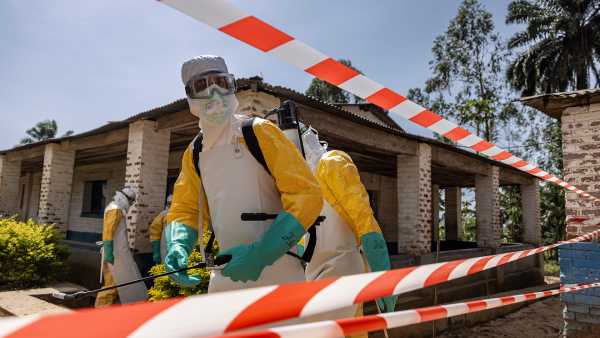
Part of the Médecins Sans Frontières (MSF) Ebola response team disinfects a house in the Democratic Republic of the Congo during the current Ebola outbreak.(Image credit: Michel Lunanga / Stringervia Getty Images)Share this article 0Join the conversationFollow usAdd us as a preferred source on GoogleSubscribe to our newsletter
The Ebola epidemic in Central Africa was designated a public health emergency of international concern in May, and since that time, over 900 suspected cases and 200 fatalities have been documented in the Democratic Republic of the Congo (DRC) and Uganda.
With the majority of cases affecting the DRC, this signifies the country’s 17th Ebola outbreak since the virus’s identification on the Ebola River in 1976. Most of these outbreaks were caused by the highly virulent Zaire virus, a strain of Ebola virus for which treatments and vaccines are now approved.
This most recent outbreak, however, is being driven by the Bundibugyo virus, a more recently identified strain that is less deadly than Zaire but lacks approved vaccines or treatments.
As per modeling detailed in the Morbidity and Mortality Weekly Report, this epidemic has the potential to become one of the most significant Ebola outbreaks on record. It could surpass 20,000 cases within the next three months if effective intervention strategies are not implemented. Such efforts are in progress, but they are hampered by regional conflict and a scarcity of international assistance and healthcare infrastructure.
Vaccines can aid in controlling Ebola outbreaks, as well as preventing future ones, by allowing health officials to immunize the close contacts and potential contacts of confirmed and probable cases. Alternatively, all individuals within a specific neighborhood or village might receive vaccinations, if an outbreak is relatively localized. Consequently, a major initiative is now underway to develop entirely new vaccines for the Bundibugyo virus.
“The objective is to develop a safe and effective Bundibugyo vaccine as rapidly as possible,” stated Dr. Richard Hatchett, CEO of the Coalition for Epidemic Preparedness Innovations (CEPI), in an email to Live Science.
Different virus, different challenge
Since the 2014-2016 Zaire virus epidemic — the most extensive Ebola outbreak ever documented — scientists have acquired substantial knowledge regarding the control of these epidemics. Tools such as rapid diagnostics, contact tracing, isolation, infection prevention, safe burial practices, and prompt clinical care are crucial for reducing transmission and saving lives.
However, according to Dr. Anne Rimoin, chair of infectious diseases and public health at UCLA, there is significantly less field experience with this particular outbreak, as there have only been two recorded instances of Bundibugyo outbreaks to date.
Furthermore, the Bundibugyo virus may have gained a considerable head start before being detected. Experts surmise that, although the outbreak was officially declared in mid-May, it likely commenced in February.
If new vaccines receive approval, they could assist in curbing the outbreak by employing strategies like “ring vaccination.” Through a combination of surveillance, contact tracing, and rapid immunization, health officials can inoculate the close contacts of an infected individual, thereby establishing a “ring of protection.” Potential contacts, and contacts of individuals with probable cases, can also be vaccinated under this approach.
Other strategies include the focused vaccination of populations experiencing the highest transmission rates or phased vaccine rollouts that prioritize those most vulnerable to exposure. Even post-exposure vaccination, if administered swiftly, can mitigate the risk of severe illness and mortality.
Global efforts accelerate vaccine development
Scientists and vaccine manufacturers are now engaged in a race to design, test, produce, and distribute vaccines that could help prevent this outbreak from persisting for years, as previous outbreaks have.
CEPI, a global consortium dedicated to expediting the development of vaccines and treatments against epidemic and pandemic threats, recently announced its backing for the creation of three vaccine candidates from three distinct institutions: the International AIDS Vaccine Initiative (IAVI), the pharmaceutical company Moderna, and the University of Oxford. The vaccines will be manufactured by the Serum Institute of India.
Three candidate vaccines are being developed for the Bundibugyo virus.
(Image credit: Andrew Brookes via Getty Images)
“We are supporting three distinct vaccine platform technologies,” Hatchett remarked. “All of these technologies have also been employed to create early-stage candidate vaccines targeting viruses closely related to Bundibugyo, so we possess considerable information on their performance against other Ebolaviruses.”
The IAVI vaccine utilizes rVSV vaccine technology, similar to that employed in the vaccine against the Zaire virus. rVSV stands for “recombinant vesicular stomatitis virus,” and rVSV-based vaccines incorporate a weakened, flu-like virus typically found in animals. This virus is modified to produce proteins belonging to the target, in this instance, the Bundibugyo virus.
Previous Zaire vaccines developed with this technology demonstrated 95% to 100% efficacy in preventing Ebola disease after a single dose — a characteristic that can be vital in managing an outbreak.
Oxford’s vaccine employs the same technology that underpins the Oxford-AstraZeneca COVID-19 vaccine. Known as the ChAdOx1 platform, it utilizes a harmless variant of a common cold virus that infects chimpanzees as its foundation. This platform is more easily adaptable to new strains than rVSV technology, and whereas rVSV vaccines require freezing, it can be transported at refrigerated temperatures.
Moderna — whose mRNA vaccine against COVID-19 was the first to enter human trials — is now utilizing the same technology to design a Bundibugyo virus vaccine. This platform uses mRNA, a molecular relative of DNA, which instructs cells to generate small components of an inactive viral protein. Due to their rapid production capabilities and design adaptability, mRNA vaccines have become the preferred method for quickly designing vaccines against specific viral species.
Preparing the vaccines
Once designed and subjected to laboratory testing, the vaccines will proceed swiftly to early-stage clinical trials, during which they will be evaluated on a small cohort of healthy volunteers, according to a CEPI announcement. These vaccine platforms have already been safely utilized against analogous viruses in both trials and real-world settings.
Should the safety trials prove successful, late-stage trials will commence, with the aims of testing a larger number of volunteers and gathering sufficient data for emergency use authorization and subsequent production.
According to the World Health Organization (WHO), this process could span seven to nine months. The CEPI coordination initiative is intended to shorten this timeframe by providing financial support for the late-stage clinical trials. In prior outbreak scenarios, vaccine manufacturing often occurs concurrently with safety testing to ensure swift deployment.
It remains uncertain which vaccine might prove most effective or be deployed first, though the WHO regards the IAVI vaccine as likely the most promising. In the interim, coordinated on-the-ground efforts will probably have the most significant impact on the outbreak’s progression in the immediate future, experts informed Live Science.
Distributing vaccines in an outbreak zone such as the DRC presents numerous challenges. The DRC typically depends on vaccine imports, but many regions lack the necessary refrigerated storage facilities for certain vaccines. Even when available, unreliable electricity grids and inadequate road networks continue to impede maintaining vaccine cold chains during transportation. Vaccine hesitancy can also be prevalent in certain areas.
Related stories
- ‘A disease anywhere can be a disease everywhere tomorrow morning’: Public health expert on Ebola and the threat of future outbreaks
- Ebola can linger in brain fluid and trigger deadly relapse, monkey study suggests
- Deadly Ebola outbreak is a public health emergency of international concern, WHO declares
“We possess superior tools and more knowledge than we did a decade ago, but all these tools are only meaningful if they reach the front lines rapidly, and if communities have confidence in the response,” Rimoin commented. “Thus far, we are encountering significant issues with trust in this region.”
While vaccines are valuable assets, researchers and responders must maintain realistic expectations regarding the timeline, Rimoin added.
“These will certainly not be tools that are ready to alter the trajectory of the outbreak by tomorrow,” Rimoin stated. “The response will continue to rely on fundamental measures: case identification and isolation, contact tracing, safeguarding healthcare workers, and fostering community trust.”

