

in News
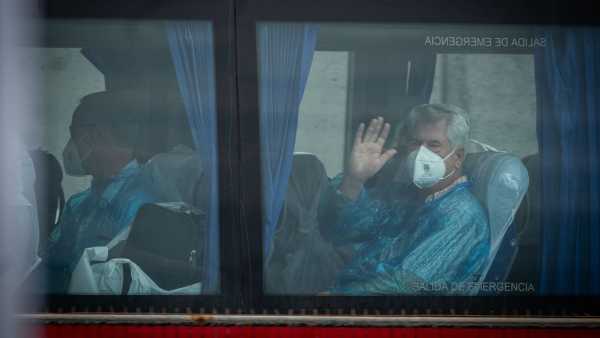
British passengers from the MV Hondius were disembarked and transported by coach to the airport from Granadilla Port in Tenerife on May 10, 2026. Measures were implemented to mitigate any potential risk of viral transmission. (Image credit: Anadolu / Contributor via Getty Images)Share this article 0Join the conversationFollow usAdd us as a preferred source on GoogleSubscribe to our newsletter
Following the hantavirus outbreak aboard the cruise ship MV Hondius, a significant portion of the 150 passengers are currently under observation or in quarantine for up to six weeks, reflecting the virus’s extended incubation period. Public health officials have underscored that human-to-human transmission of the Andes virus—the sole hantavirus variant known to spread among people—is infrequent and linked to “close and extended contact.”
However, a precise and uniform definition of this term is lacking.
The World Health Organization categorizes high-risk contacts as including “intimate partners, cohabitants, and individuals with sustained indoor close proximity.”
Regarding the precautions healthcare providers should adopt when attending to patients, the use of personal protective equipment (PPE), such as a high-filtration face mask, is advised.
“When it comes to any recommendations for patient care, one should adopt a cautious approach,” stated Dr. Dean Blumberg, head of the Division of Pediatric Infectious Diseases at the University of California, Davis (UC Davis). “This is why the guidance suggests employing N95 respirators and implementing airborne precautions for such patients.”
Airborne illnesses are those transmitted when infectious agents remain airborne and cause illness upon inhalation by others; COVID-19, tuberculosis, and measles serve as examples of such diseases. Airborne transmission can occur over short or long distances and may involve either minute or large infectious particles expelled by an infected individual.
Concerning the Andes virus, it is understood that individuals can contract the illness by inhaling minuscule particles from infected rodent excreta, urine, or saliva present in the air—particles that might have been stirred up, for instance, during room cleaning. The virus has also been contracted by individuals dining indoors in proximity to an infected person. For certain specialists, this suggests a degree of airborne transmission. However, if such transmission does happen, it does not imply that this method of spread is highly prevalent.
Ninety-four other individuals attended the gathering, yet they did not contract the virus.
Dr. Dean Blumberg, chief of the Division of Pediatric Infectious Diseases at UC Davis
“There is considerable concern regarding this genotype that spreads from person to person, yet in Argentina, it has been present for decades, and the outbreaks have remained contained,” commented Juan Diego Pinotti, a postdoctoral researcher affiliated with Argentina’s National Council of Research, based at the Institute of Animal Diversity and Ecology at the National University of Córdoba.
“What we understand is that it is not widespread,” Dr. Blumberg added. “If it were, we would observe more person-to-person outbreaks in Argentina. In reality, only a small number of such events have been documented.”
The most extensive recorded outbreak of the Andes virus occurred between late 2018 and early 2019 in Epuyén, a Patagonian community with a population of approximately 2,400. The outbreak originated when an individual experiencing fever attended a birthday celebration with around 100 attendees. In the subsequent weeks, five individuals seated near the initial patient developed symptoms, initiating a chain of transmission that resulted in 34 confirmed cases and 11 fatalities by the conclusion of the outbreak.
Researchers in Argentina studying the outbreak identified three patients as “superspreaders,” responsible for 21 cases—more than 60% of the total outbreak cases. Laboratory analyses revealed that these individuals had hepatic damage and higher viral loads compared to other infected persons.
The timing of symptom onset appeared to be a crucial element in transmission: In over half of the cases, transmission could be traced back to a single day when the infected person first experienced fever and subsequently had contact with another individual who later became unwell.
While the Epuyén outbreak illustrates the Andes virus’s capacity for human-to-human transmission under specific circumstances, experts advise against overstating its transmissibility.
“There were 94 other individuals present at the party who did not contract the virus,” Dr. Blumberg remarked. “Furthermore, 82 healthcare professionals attended to the infected patients, many without employing masks or any other PPE, yet they remained uninfected.”
RELATED STORIES
- A study suggests that hantavirus outbreaks may become more frequent as rodents carrying the virus expand their habitats
- ‘We are less equipped for communicable pathogens’: The U.S. has diminished its capacity to track and control outbreaks, according to an Emory epidemiologist
- 32 diseases transmissible from animals
Additionally, consider the instance of a woman in 2018 who, after contracting the Andes virus in Argentina, brought it to Delaware. More than 50 individuals were monitored for potential exposure, but none contracted the infection.
Dr. Blumberg suggested that maintaining a degree of ambiguity in the definition of “close and prolonged contact” might be most beneficial for public health communication. “We lack precise knowledge of the exact timing or distance, and this likely varies depending on the illness stage of the infected individual and their symptom severity,” he explained.
He posits that the close-contact environment characteristic of a cruise ship, where passengers interact much more intimately than in their everyday lives, was instrumental in the virus’s propagation.
“You are exposed to an elevated risk for every infection, including one like this that has limited transmissibility,” he stated. “I believe it was the cruise ship environment that uniquely facilitated this event.”