

in News
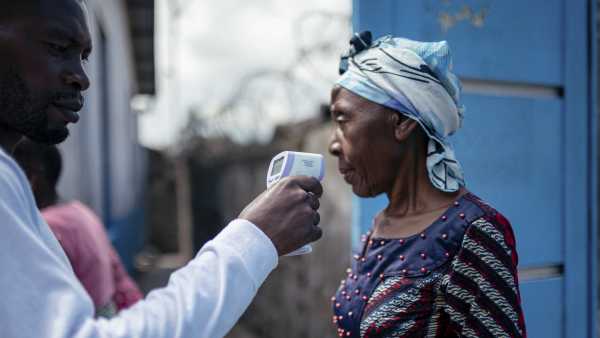
CBCA Virunga Hospital in the DRC checks visitor temperatures in the wake of the Ebola outbreak.(Image credit: Jospin Mwisha / AFP via Getty Images)Share this article 0Join the conversationFollow usAdd us as a preferred source on GoogleSubscribe to our newsletter
The World Health Organization (WHO) declared on Sunday (May 17) that an Ebola epidemic in Africa has become a public health emergency of international concern.
Dr. Jean Kaseya, the director general of the Africa Centres for Disease Control and Prevention, informed BBC News on Monday that the Democratic Republic of the Congo (DRC) has recorded over 390 suspected Ebola cases and more than 100 fatalities in the ongoing outbreak. Additionally, two further cases have been documented in Uganda.
In the past two Bundibugyo virus outbreaks, the case fatality rates varied between 30% and 50%.
“We have lost over 100 individuals already, and we lack a vaccine and available medicine for support,” Kaseya stated to BBC News.
“This is my primary concern, as we need to determine how to halt the transmission. We are collaborating with the governments of the DRC and Uganda to cease the spread of this outbreak,” Kaseya elaborated.
According to CBS News, at least six American citizens were exposed to the virus while in the DRC, though it remains uncertain at this juncture if any have contracted the infection.
The WHO clarified that the current outbreak does not meet the criteria for a pandemic, unlike COVID-19 in 2020. However, in its Sunday announcement, the WHO characterized the outbreak as “extraordinary” and cautioned that its scale might be considerably larger than currently reported.
The WHO’s declaration signifies that the outbreak poses a substantial risk of spreading across borders and may necessitate international collaboration for containment. It also empowers the WHO to issue directives on how nations should address the situation.
Ebola is a frequently fatal illness transmitted from animals, such as fruit bats and chimpanzees, to humans. Individuals can become infected following direct contact with the bodily fluids of affected animals. Ebola can also be transmitted from person to person through contact with infected bodily fluids. Initial symptoms include fever, fatigue, headache, and muscle aches, which can make it difficult to differentiate from other common illnesses, such as malaria.
A healthcare professional was the first documented suspected case and fatality in the present outbreak, experiencing symptoms that began on April 24. The WHO reports that a total of at least four healthcare workers have succumbed during the outbreak thus far, underscoring deficiencies in control measures and the potential for healthcare facilities to exacerbate the disease’s spread.
Laboratory tests confirmed the virus responsible for the outbreak as Ebola on May 15. Cases in the DRC have been reported in three distinct regions within the Ituri Province in the country’s northeast, which shares a border with Uganda. The two confirmed cases in Uganda involved individuals who had recently traveled from the DRC.
RELATED STORIES
- What counts as ‘close contact’? Why the risk of hantavirus transmission is tricky to define
- Ebola may have lingered in a survivor for 5 years before sparking new outbreak
- A pill can stop people from developing COVID after being exposed to the virus, trial finds
The WHO warns that factors such as the DRC’s humanitarian crisis, extensive population movement, and its widespread network of informal healthcare providers intensify the risk of the disease’s propagation. Similar factors contributed to a major Ebola epidemic in the eastern DRC between 2018 and 2020. That epidemic led to over 3,300 confirmed cases and 2,299 deaths, but it was caused by the Zaire ebolavirus, a viral species for which vaccines are available.
Ongoing conflict in the Ituri province impedes the travel of disease surveillance teams, hinders the deployment of rapid response units, and complicates the secure transportation of laboratory samples, according to the WHO. Health authorities also express concern that the disease could spread to additional countries in the region, with the DRC’s neighboring nations identified as being at high risk. These nations to the north and east include the Central African Republic, South Sudan, Uganda, Rwanda, and Burundi.
“This situation necessitates international coordination and cooperation to ascertain the scope of the outbreak, harmonize surveillance, prevention, and response initiatives, augment and reinforce operations, and ensure the capacity to implement control measures,” stated Tedros Adhanom Ghebreyesus, the WHO Director-General, in the Sunday announcement.