

With an average of six travellers per day, the bygone station was recognized as the least frequented station across the entire London Underground system. Share Article Share Article Facebook X LinkedIn Reddit Bluesky Email Copy Link Link copied Bookmark Comments
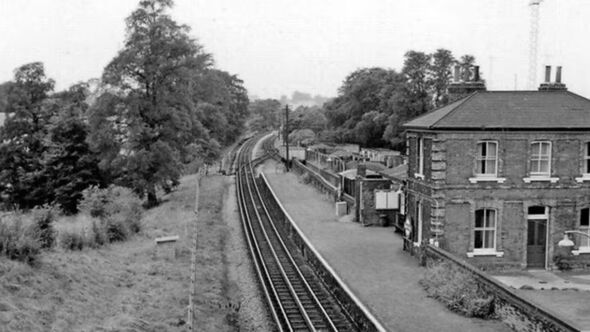
One London Underground stop was deserted by the rail system and has since been transformed into a dwelling. Blake Hall, a personal estate, was given a new purpose after it proved unsuccessful as a Tube station.
Clocking in at around six passengers daily, the previous station, situated in Stanford Rivers, to the south of Bobbingworth in Essex, unfortunately earned the distinction of the most underused station on the complete London Underground grid. Originally inaugurated in 1865, the station’s primary role was to convey the produce of local farmers to London.
Article continues below ADVERTISEMENT
From 1949 to 1957, a British Railways connecting service operating between Epping and Ongar also called at Blake Hall, basically extending the Central line. It formally joined the Central line family in 1957 when electrified trains started making stops there. However, by 1966, services to Blake Hall began to decline, with no trains stopping there on Sundays because of a lack of demand. Considering the station’s out-of-the-way location, it’s not really surprising that it struggled with popularity. Even when it was most successful, only 17 travellers made use of it each day.
READ MORE: Longest tunnel in UK stretches for 17 miles and is used by 900,000 people every
READ MORE: London Tube station hidden on the map for years because of who used it
In 1981, it was resolved that the station lacked economic viability. Services persisted in operating between Epping and Ongar until 1994, after which that section of the Central line was also decommissioned.
The station was sold privately and reconstructed into a residence, with the platform being taken down. However, in 2012, the platform was reconstructed purely for aesthetic reasons. The Epping-Ongar heritage railway service passes by the station, but it doesn’t come to a standstill there.
Article continues below ADVERTISEMENT
London is home to numerous derelict underground stations, frequently dubbed “ghost stations,” with over 40 sites that have been either shut down or relocated across the system.
Article continues below ADVERTISEMENT
Notable instances encompass Aldwych (closed 1994), Down Street (1932), and Brompton Road (1934), which acted as shelters during wartime or were no longer in active service.
The day’s biggest headlines in UK and World news Subscribe Invalid email
We use your sign-up to provide content in ways you’ve consented to and to improve our understanding of you. This may include adverts from us and 3rd parties based on our understanding. You can unsubscribe at any time. Read our Privacy Policy

Get More of Our News on Google
Set Daily Express as a ‘Preferred Source’ to get quicker access to the news you value.

The London Transport Museum manages exclusive, ticketed tours of locations such as Aldwych, Down Street, and the Euston tunnels, providing an insight into their background, including old advertising posters and abandoned platforms.
Certain defunct platforms, like those at York Road or the former British Museum station, are visible from the windows of passing trains.