As the crucial hour for D-Day approached, the atmosphere within the headquarters of Britain’s Secret Intelligence Service, MI6, in central London was charged with intense expectation. Years of meticulously planned deception, designed to mislead German generals defending the designated landing zones for Operation Overlord, were about to face their ultimate test in the largest amphibious assault ever attempted.
For the men and women serving in British intelligence, this was the apex of all their efforts. The prospect of failure was unthinkable. Should the Germans uncover the true destination of the Allied fleet, tens of thousands of British, American, and Commonwealth soldiers would face annihilation on the beaches of Normandy, prolonging the war for years. The balance between defeat and victory hinged on Hitler being convinced that the Allies’ intended objective was the Pas de Calais, situated 200 miles further along the coast.
Article continues below ADVERTISEMENT
Given the monumental stakes and the high-octane drama involved, it seems extraordinary that a British intelligence officer instrumental in the deception campaign vital to Operation Overlord would depart the service before a single vessel embarked for France, before any shots were fired, and before victory was secured.
Read more: WW2 spies: The true story of two traitors who spied on Britain
Read more: Why do some still regard Kim Philby as a hero?
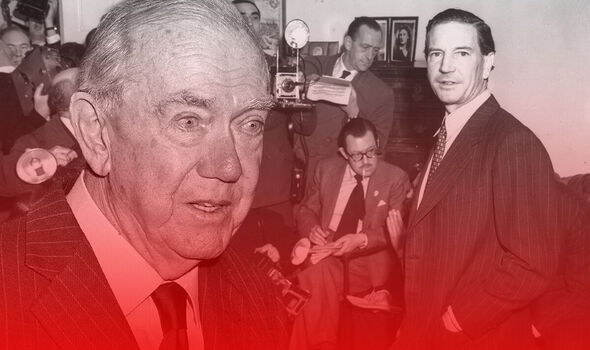
Yet, on June 2, 1944, three MI6 counter-intelligence officers convened for lunch at the Café Royal in central London. Two of them were former schoolmates from Westminster School: Kim Philby, who led MI6’s counter-intelligence division, and Tim Milne, nephew of A.A. Milne, the author of the Christopher Robin stories, and Philby’s trusted deputy. The third officer present was Graham Greene, who oversaw MI6’s operations in Portugal.
The trio formed an effective unit. Philby and Milne held a sense of pride and protectiveness towards their most notable recruit, the acclaimed author Greene. In return, Greene appreciated Philby’s steadfast support during his challenging tenure in Sierra Leone and a contentious dispute with MI5 concerning an intelligence operation in the Portuguese-controlled Azores.
Article continues below ADVERTISEMENT
As the three British intelligence officers gathered at the bar of the Cafe Royal, Greene announced that he would be paying for the lunch. Perhaps he hoped this gesture of goodwill would help soften the unwelcome news he was about to impart.
Article continues below ADVERTISEMENT
While they were dining, Greene informed his companions of his intention to resign from the service immediately. He made it clear that his decision was final and unalterable. Philby and Milne expressed their bewilderment and urged Greene to postpone his resignation until after D-Day. Greene, however, remained resolute.
His justification for leaving MI6 on the cusp of its greatest achievement, with many agents under his purview still active in Portugal and the Azores, is not entirely convincing. He claimed that Philby had offered him a promotion he did not wish to accept and stated that he was dissatisfied with his new duties. While he did not object to “urging the Portuguese on orders from above… he had no intention of personally undertaking it.”
Greene’s decision to depart the service at such a pivotal moment has perplexed his biographers for decades. Could the author have harboured suspicions that Kim Philby was collaborating with the Russians and confronted him with these doubts? Did he then resign rather than betray his friend?
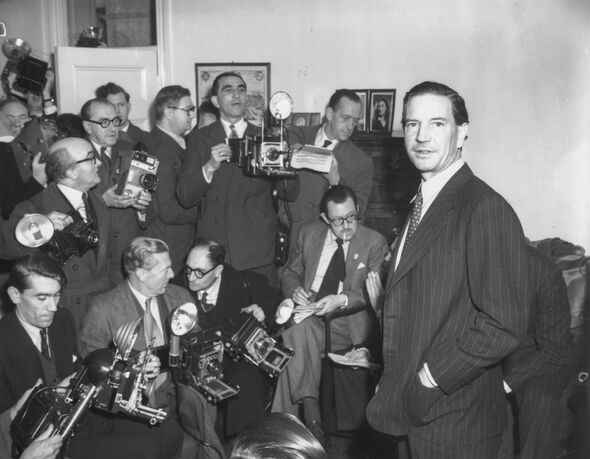
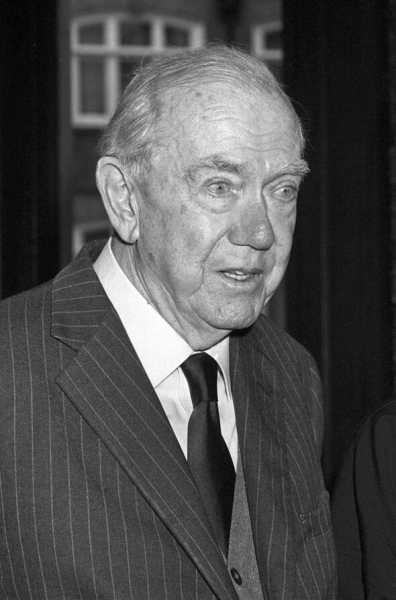
Graham Greene and Kim Philby first met in 1942 in London, both serving as MI6 officers. With celebrated novels such as Brighton Rock, The Power and the Glory, and The Ministry of Fear, Greene was already a well-known figure. Post-war, his works like The Heart Of The Matter, Our Man In Havana, and The Quiet American solidified his reputation as a preeminent storyteller, while his evocative prose in films like The Third Man garnered him a global audience.
Philby, meanwhile, emerged as the most successful Soviet agent of the 20th century. He was the foremost member of the Cambridge spy ring and headed British counter-intelligence before absconding to Moscow in January 1963. Greene possessed remarkable intuition, and his sharp, insightful analyses of character enabled him to understand people and nations more profoundly than any other writer. Had he, by June 1944, discerned Philby’s true nature? Had Philby inadvertently revealed himself?
Following Philby’s defection, Greene controversially stood by him, famously declaring his preference for loyalty to friends over loyalty to nations. Nevertheless, Greene remained unofficially connected to MI6, secretly relaying any pertinent intelligence gathered during his travels to global political hotspots to the service. Throughout these years, he maintained contact with his former superior living in Russia, dispatching numerous letters to Philby and forwarding the replies to the head of MI6. In 1986, he journeyed to Moscow to visit Philby discreetly in his apartment near Pushkin Square.
Their bond endured until Philby’s passing in 1988, mere weeks after Greene’s last encounter with him in Moscow. Neither individual ever divulged the content of their private discussions after the war. By then, the espionage skills they had honed had become second nature, deeply ingrained. Greene employed them effectively to elude his biographers, while Philby utilized them in service to the KGB during the height of the Cold War and well into the period of thawing relations under Glasnost.
In his literary works, Greene consistently explored the intertwined themes of loyalty and betrayal. Whether examining religion, personal relationships, or espionage, the presence of Kim Philby could always be felt. In turn, Philby, during his exile in Russia, corresponded with Greene, his sole link to his past in espionage, seeking comprehension of the homeland he had been compelled to abandon.

It appears the two men were inextricably linked. Perhaps they were captivated by each other’s enigmatic nature. Yuri Modin, Philby’s KGB handler post-war, believed that no one – neither British intelligence, the Soviets, nor the women he loved – had “ever managed to penetrate the armor” that shielded Philby’s innermost self.
The same could be asserted about Greene. Indeed, he himself commented: “If anybody ever tries to write a biography of me, how complicated they are going to find it and how misled they are going to be.”
In their efforts to safeguard, preserve, and enhance their reputations, the past became increasingly shrouded in secrecy. Greene’s mistress, Yvonne Cloetta, remarked that his true secret lay in “his passion for secrecy.” Only now, with the revelation of correspondence and case files from their operational periods, is it possible to shed light on the clandestine lives of these two MI6 officers – the traitor and the writer.
Greene was recruited into MI6 in August 1941 through connections held by his sister, Elisabeth. He was initially assigned to Sierra Leone but performed so well that he was recalled to headquarters in March 1943, where he commenced work in the Iberian section, operating under Philby.
Greene was already an established literary figure, while Philby had achieved legendary status as a foreign correspondent during the Spanish Civil War, having been personally decorated by General Franco after his jeep was destroyed while reporting from the front lines.
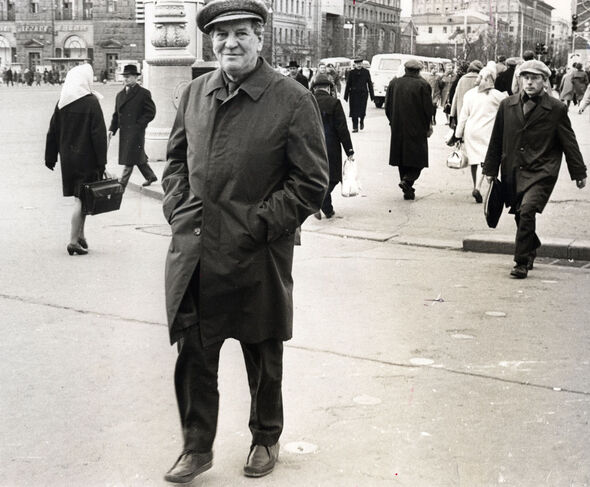
The two men formed a strong rapport, managing covert agents and operations that significantly contributed to the Allied war effort. These included Operation Torch (the invasion of North Africa), the British occupation of the Azores, and the disruption of the Abwehr spy network on the Iberian peninsula.
Greene took immense pride in his service to his country as an MI6 officer but seldom discussed or wrote about it. He rigorously adhered to the highest principle of the Secret Intelligence Service, enforced by the Official Secrets Act, which mandates that an intelligence officer must never speak of their work. But did he truly believe that loyalty to his friend, the traitor Philby, superseded loyalty to Britain and MI6?
During the 1970s and 80s, MI6 would have greatly welcomed the opportunity to repatriate Philby, thereby achieving a significant propaganda victory against the KGB. Moscow had frequently entertained the possibility that Kim Philby, Russia’s most accomplished penetration agent, might have been a double agent, actually working for SIS all along.
As Greene neared his own end in 1991, the author entertained the same notion, questioning whether Philby had perpetrated the ultimate deception against Greene, secretly serving British Intelligence while presenting Greene as an unwitting pawn.
This scenario would position Philby as a triple agent.
Reportedly, Greene was so troubled by this idea that he spent the final days of his life rereading his correspondence with Philby, seeking indicators of his friend’s true allegiances.
The day’s biggest headlines in UK and World news and more Subscribe Invalid email
We use your sign-up to provide content in ways you’ve consented to and to improve our understanding of you. This may include adverts from us and 3rd parties based on our understanding. You can unsubscribe at any time. Read our Privacy Policy
However, in character for a man whose life was deeply entrenched in secrecy, having passed away at the age of 86 in April 1991, he died without revealing his ultimate conclusion.
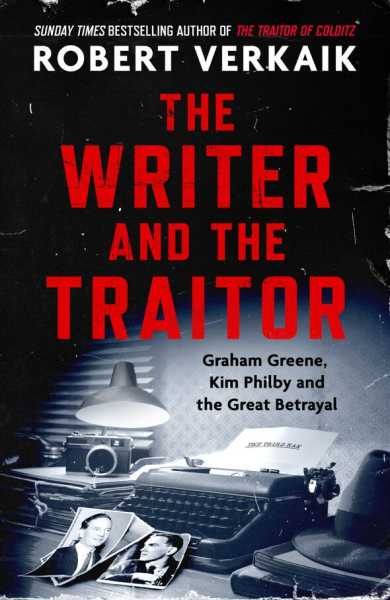
- The Writer and the Traitor by Robert Verkaik (Headline, £22) is out now