

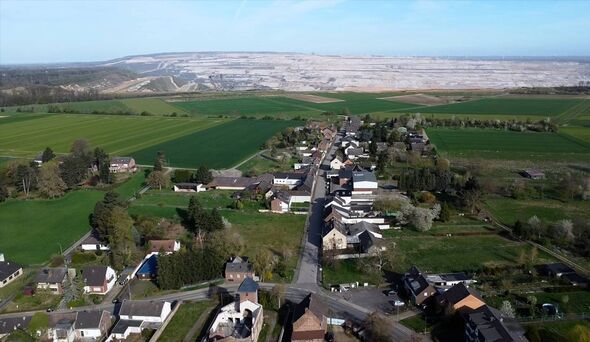
A modest settlement, inhabited for at least a millennium, is now entirely uninhabited after its inhabitants were relocated. In 2013, German authorities determined to rehouse Morschenich’s 500 residents in a new locality, also named Morschenich, situated approximately two miles away. The initial intentions involved expanding a vast open-cast coal mine over the site of the former village.
However, while all residents of the original German village, Morschenich-Alt, had been moved by 2015, the settlement itself remains standing, and the coal mine expansion plans have been abandoned. The adjacent Hambach open-pit lignite mine, a 300-meter deep excavation spanning roughly 44 square kilometers, has been decommissioned.
Article continues below ADVERTISEMENT
Discussions are currently underway regarding the renaming of the deserted “ghost town” and its transformation into a “village of the future.” Nevertheless, these propositions are still pending, and the settlement – potentially to be renamed Bürgewald – stands eerily vacant, with most of its streets and properties deserted and progressively being reclaimed by nature. Remarkably, despite these circumstances, a small number of individuals have actually taken up residence in the spectral, forsaken village.
Urban explorer Colin, who chronicles his adventures on his Bearded Explorer channel, has visited the haunting “ghost town” and even conversed with one of its few remaining inhabitants.
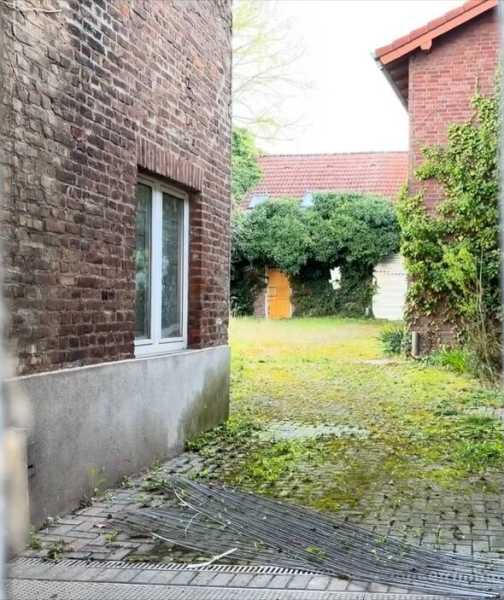
While wandering through the desolate streets, Colin made a rather surprising discovery and learned that a significant portion of the village’s future remains uncertain. Colin explained: “It’s very eerie, it’ll be interesting to see what they actually do with this place, but I guess only time will tell.” For now, much of the once-vibrant town is completely overgrown – with weeds and grass sprouting through paths and driveways, and trees and hedges threatening to completely engulf the deserted residences.
Article continues below ADVERTISEMENT
Related articles
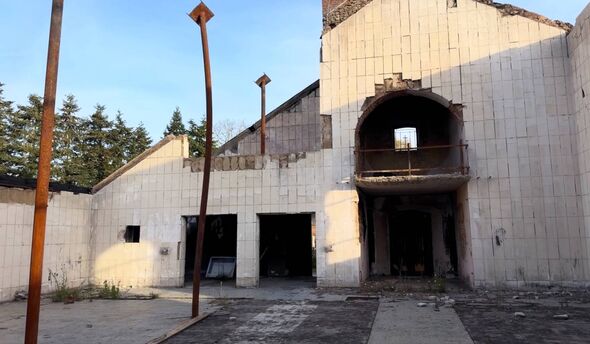
The village’s church has been devastated by fire. “You can still see some of the beautiful walls inside there, but sadly, there’s really not much left of it anymore,” Colin added.
Article continues below ADVERTISEMENT
Most of Morschenich’s businesses and homes have been sealed off, in some instances with doorways completely bricked up, making it difficult to view the interiors of the structures. The villagers were not afforded much time to vacate, with Colin explaining: ” You can imagine there’s quite a lot of angry residents who are probably wishing they’d never moved out in the first place.”
Colin remarked that the streets were so eerily empty, it felt as though the world had ended and he was among the last survivors. He continued: “It’s just so strange walking down a road that should be really busy this time of day, but it’s just not.”
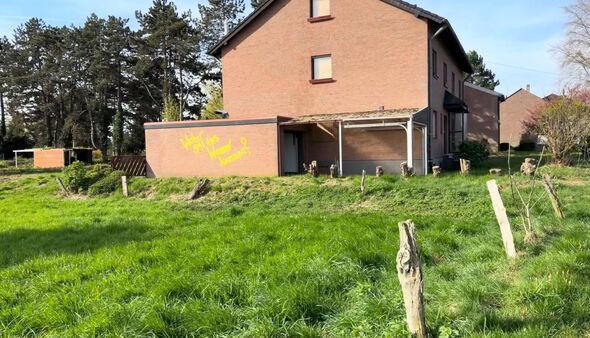
Despite Morschenich being almost entirely abandoned, to his immense surprise, Colin managed to encounter someone who resides there. Regrettably, the man spoke no English, but with the assistance of a translation application, he was able to convey a sense of the village’s current state. Colin went on: “He told us there are only eight families living in here now…five along this road. and two along the other half. That is just mind-blowing.”
The man revealed that none of the original German inhabitants remained, with the small number of residents now calling the village home hailing from nations including Turkey, Afghanistan, and Egypt.
As Colin explored the village, he observed numerous instances where buildings and pathways were starting to deteriorate, with only a decade of neglect allowing nature to almost completely reclaim the area.
He noted that there are aspirations to transform the now-abandoned coal mine into a vast inland sea, though local inhabitants have voiced concerns regarding the viability of such projects: “While Mossnik became a ghost town, the decision to halt the mining expansion in the area has allowed the village to avoid total destruction and instead move forward to rehabilitation on a new development,”
Get the day’s biggest headlines in UK and World news and more Subscribe Invalid email
We use your sign-up to provide content in ways you’ve consented to and to improve our understanding of you. This may include adverts from us and 3rd parties based on your understanding. You can unsubscribe at any time. Read our Privacy Policy
Colin explains. “As of July 2024, the town was renamed Bürgewald, meaning place of the future. Its shift from planned demolition to revive the community and of course reversing the initial status of an abandoned village.
“There may be new hope on the horizon for the town, but what would happen to the mine? There are talks of flooding it and turning the 19 square mile pit into a lake. But where would the water come from? Only time will tell what the future truly holds for this place.”