

Share Article Share Article Facebook X LinkedIn Reddit Bluesky Email Copy Link Link copied Bookmark Comments

A highly controversial and divisive figure from British history is set to make a spine-chilling return this month to a public house erected using stones from the stronghold where she encountered her tragic end.
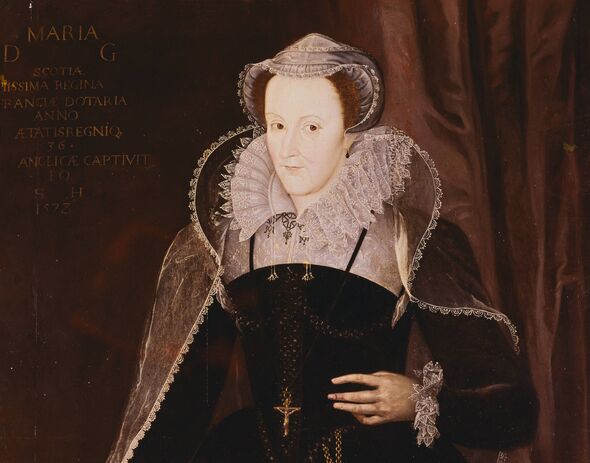
Mary, Queen of Scots, was beheaded at Fotheringhay Castle in Northamptonshire on February 8, 1587, after her relative, Queen Elizabeth I, reluctantly decreed her execution.
Article continues below ADVERTISEMENT
The British monarch sanctioned Mary’s demise for treason following her participation in a scheme to overthrow Elizabeth, exposed when intelligence chief Francis Walsingham intercepted the Scottish queen’s correspondence with the plotters.
Notwithstanding her obvious guilt, Elizabeth was concerned about setting a dangerous precedent by executing a fellow crowned head of state, which could incite similar actions against herself.
Regardless, Mary’s saga has persisted, and folklore dictates that she manifests at The Talbot Hotel in Oundle, Northants, annually around the anniversary of her passing.
Article continues below ADVERTISEMENT
Read more: Twisted murderer tortured, raped and killed young girls in ‘manmade dungeon’
Read more: Inside UK’s first Sea Life centre left abandoned with tanks still full of water
Read more: Couple check wall of Victorian home and make wild discovery
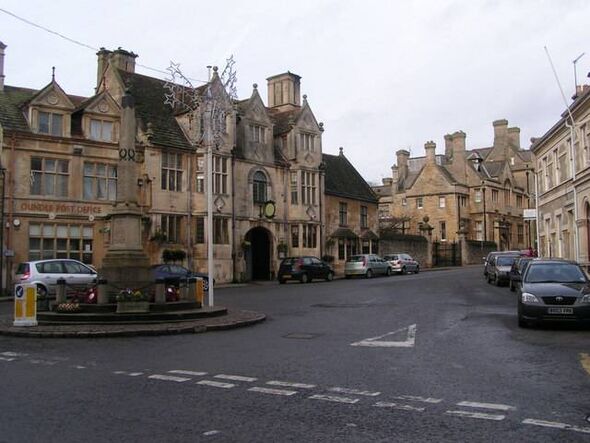
Oundle, situated a mere three miles from Fotheringhay, is an ancient market town, and among its most noteworthy structures is a Grade I-listed building with a past connected to the doomed sovereign.
Article continues below ADVERTISEMENT
An inn has existed on the hotel’s location since the 16th century, throughout the entire Tudor era, although the building presently visible on the town’s main street was reconstructed in 1626. Numerous reports suggest that masonry from Fotheringhay Castle was integrated into the hotel’s existing structure.
Local stories also suggest that the bedroom woodwork, impressive oriel window, and staircase all originate from the old fortress – where Richard III was born.
Nowadays, the castle survives only as a grassy mound, having been neglected for centuries before being completely destroyed in 1628.
The narrative also recounts that her executioner lodged at The Talbot on the evening before his macabre assignment, feasting on pigeon pie.
Marian Pipe, who authored Northamptonshire Ghosts and Legends, told Northants Live: “The unfortunate queen is believed to haunt the upper levels and a couple of the bedrooms above.
“Numerous individuals have witnessed the spectral form of a woman in a long dark gown, positioned at the bottom of a bed in one of the rooms. She is occasionally spotted gazing forlornly through the leaded windows on the stairway.
“Sometimes, occupants sleeping on that level have been disturbed by the wailing of a woman, which persists for hours. Often, the apparition will happen after renovations have taken place in the building.”
Paranormal investigators often mention the concept that the torment of Mary’s final journey was ’embedded’ in the material essence of the staircase, which was later moved to the tavern. Over the ages, observers have documented various other recurring events, with the most famous sighting being a ghostly shape clad in a lengthy black robe (the shade Mary wore to her execution, although she famously removed it to reveal scarlet undergarments on the scaffold), slowly moving down the oak stairs.
The latest science news from the natural world, health, tech and beyond Subscribe Invalid email
We use your sign-up to provide content in ways you’ve consented to and to improve our understanding of you. This may include adverts from us and 3rd parties based on our understanding. You can unsubscribe at any time. Read our Privacy Policy

Get More of Our News on Google
Set Daily Express as a ‘Preferred Source’ to get quicker access to the news you value.

Guests residing in the ‘Mary Queen of Scots Room’ at the head of the stairs have recounted hearing constant, mournful cries penetrating the walls that lasts for hours.
Upon the staircase’s handrail, a distinct depression exists in the wood. Legend states it was produced by Mary’s weighty signet ring as she grasped the rail to steady herself while proceeding to her execution.