

Advancements in methods for writing and retrieving data, along with a novel approach to data storage, have made the technology more accessible than previously possible.
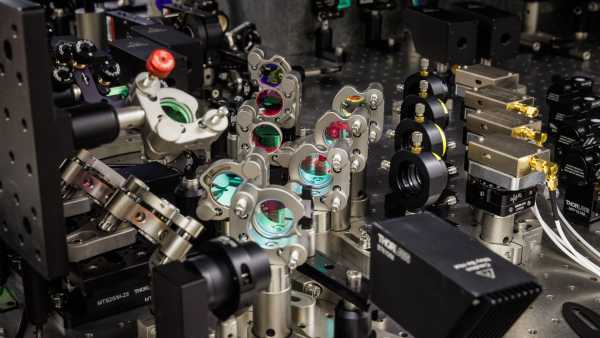
A closeup of the research writing equipment.(Image credit: Microsoft)Subscribe to our newsletter
Significant enhancements to Microsoft’s glass-based data-storage technology, along with the introduction of a new storage methodology, mean that everyday glass items, such as those used in kitchenware and oven doors, can now hold terabytes of information, with the data preserved for a remarkable 10,000 years.
This technology, developed under the initiative known as “Project Silica” since 2019, has undergone continuous refinement, and researchers presented their most recent breakthroughs on February 18th in the journal Nature.
In the latest research, the team demonstrated their ability to encode information onto standard borosilicate glass—a resilient, heat-resistant type of glass commonly found in most household kitchens. Previously, researchers were restricted to storing data on pure fused silica glass, a material that is costly to produce and obtainable from a limited number of suppliers. Furthermore, they showcased several novel techniques for encoding and reading data.
“This advancement overcomes critical obstacles to commercial viability, namely the expense and accessibility of the storage medium,” stated Richard Black, a partner research manager at Microsoft and co-author of the study. “We have pioneered the scientific principles for high-speed, parallel writing and developed a method for conducting accelerated aging tests on the inscribed glass, indicating that the data should remain intact for a minimum of 10,000 years.”
The researchers successfully inscribed 4.8 terabytes of data—equivalent to approximately 200 full high-definition movies—onto 301 layers within a glass specimen measuring 0.08 by 4.72 inches (2 by 120 millimeters), achieving a writing speed of 3.13 megabytes per second (MB/s). While this speed is considerably slower than that of hard drives (around 160 MB/s) or solid-state drives (approximately 7,000 MB/s), the researchers determined that the data stored could endure for over 10,000 years. In contrast, most hard drives and solid-state drives typically last up to about a decade.
This exceptional durability and stability are the primary drivers behind innovations like glass- and ceramic-based storage devices, primarily intended for archival purposes rather than for everyday use in most devices. Theoretically, these alternative storage formats offer significantly greater reliability than current formats and can function as a long-term repository for the vast amounts of data we generate.
To illustrate this concept, Microsoft researchers had previously outlined proposals for archiving music in Norway’s Global Music Vault. This development also follows another independent advancement in DNA storage, where 360 terabytes of data can be contained within half a mile (0.8 kilometers) of DNA.
Laser-focused on archival storage
In their study, the researchers revealed several findings that collectively contributed to more efficient and cost-effective methods for writing and reading data on glass.
Firstly, they detailed progress in a technique known as birefringent voxel writing, utilizing laser pulses. Birefringence refers to the optical property of a material that causes doubly refracted light, and voxels are essentially the three-dimensional counterparts of two-dimensional pixels. The researchers developed a pseudo-single pulse method—an improvement over the previous dual-pulse approach—where a single pulse can bifurcate based on polarization, thereby creating the initial pulse for one voxel and the subsequent pulse for another.
This was complemented by the implementation of parallel writing capabilities, allowing multiple data voxels to be written simultaneously in close proximity, thereby substantially enhancing the writing speed.
Furthermore, the researchers devised a new storage modality termed “phase voxels,” enabling data to be encoded into the material’s phase transition—the alteration of a substance’s phase state due to variations in energy and pressure—rather than its polarization, as is the case with birefringent voxels. This process can be achieved with a single pulse, and the researchers also developed a novel method for retrieving data stored in this manner.
Lastly, the team identified a method for detecting data degradation in voxels within the glass. They employed this technique in conjunction with conventional accelerated aging procedures to ascertain that the data could remain viable for over 10,000 years.
Looking ahead, the research team intends to explore enhancements to writing and reading technologies, including optimizations for the lasers used in inscribing data onto the glass storage media. They will also investigate various glass formulations to pinpoint the optimal material for this type of data storage.
Sourse: www.livescience.com