

in News
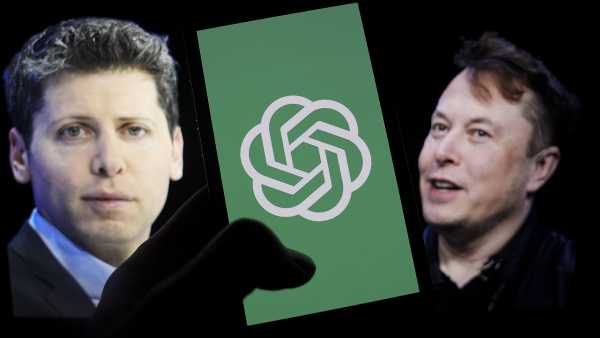
Experts believe the legal battle between Elon Musk and Sam Altman could shape the future of AI regulations.(Image credit: Anadolu via Getty Images)Share this article 0Join the conversationFollow usAdd us as a preferred source on GoogleSubscribe to our newsletter
There was a period when Elon Musk and Sam Altman were on amicable terms. However, the two prominent figures in the tech industry are currently involved in a significant legal dispute in the United States that has the potential to redefine not only OpenAI, the artificial intelligence (AI) company co-established by them in 2015, but also the broader landscape of this technology.
The lawsuit, initiated by Musk in 2024, represents the culmination of a prolonged disagreement concerning OpenAI’s transformation from a non-profit entity to a for-profit organization.
The case and the cast
The legal action involves Musk in contention with Altman, OpenAI president Greg Brockman, OpenAI itself, and Microsoft, the primary financial backer of the AI firm.
Musk played a foundational role and provided substantial funding, contributing around US$44 million, to OpenAI. According to his own testimony this week, he was the originator of the concept, the nomenclature, the recruitment of pivotal individuals, the imparting of his knowledge, and the provision of all initial capital.
Brockman served as the technical co-founder; Altman assumed the role of chief executive in 2019. Their collaboration with Musk deteriorated as the organization expanded. Musk exited the board in 2018, stating he was compelled to leave.
Conversely, OpenAI asserts that he departed when his demand for majority control was unmet. Subsequently, Musk established his own competing AI enterprise, xAI, which is now integrated with SpaceX.
What Musk is alleging
As part of the litigation, Musk is lodging accusations of contract violation, dereliction of fiduciary duty, deceptive marketing, and unethical business practices.
His central argument is that Altman and Brockman persuaded him to contribute financially with the understanding that any artificial general intelligence—or AGI—developed at OpenAI would remain “open” and accessible to all of humanity.
Musk’s lawsuit against OpenAI presents divergent accounts of the company’s founding.
(Image credit: Nikolas Kokovlis/NurPhoto via Getty Images)
Instead, Musk contends, the founders transformed the charitable organization into a “wealth machine.” This transformation occurred in two phases. Initially, through a capped-profit subsidiary established in 2019, where OpenAI’s for-profit arm limited returns, with any excess returned to the nonprofit. Subsequently, through a comprehensive restructuring into a public benefit corporation, now valued at approximately US$852 billion.
Musk’s legal representatives informed the jury that Altman and Brockman “stole a charity, period.” Outside the courtroom, Musk has directed disparaging remarks at his adversaries, leading the judge to consider imposing a gag order.
OpenAI categorically refutes Musk’s version of events. As its lead counsel, William Savitt, stated to the jury:
We are here because Mr. Musk did not get his way with OpenAI.
The company alleges, as detailed in two pre-trial blog posts, that Musk himself proposed merging OpenAI with Tesla in 2017 and withdrew when denied majority control.
OpenAI asserts that the lawsuit is “motivated by jealousy” and intended to harm a competitor.
A company under pressure
The trial is unfolding at a critical juncture for OpenAI.
The New Yorker magazine recently published an investigative piece characterizing Altman as a “pathological liar.” This investigation drew upon an internal report compiled by OpenAI’s former chief scientist, Ilya Sutskever, which alleged a “consistent pattern of deception” directed at the company’s board.
Altman described the article as “inflammatory” but conceded that “a number of mistakes were made.” Musk has been extensively promoting the article to his X followers throughout the trial.
Financially, OpenAI is experiencing significant strain.
Internal projections indicate approximately US$14 billion in losses for 2026 alone, with cumulative losses anticipated to exceed US$44 billion before any profitability is achieved.
Shortly before the trial commenced, OpenAI discreetly suspended Sora, its premier video-generation model.
Prior to its shutdown, it incurred approximately US$1 million daily in computational expenses. This closure also affected a US$1 billion partnership with Disney.
Even a recent US$122 billion funding round from Amazon, Nvidia, and SoftBank has not alleviated the pressure.
What Musk wants
Musk seeks a verdict that would reverse OpenAI’s conversion to a for-profit model, oust Altman from the nonprofit board, and remove both Altman and Brockman from their positions within the for-profit entity.
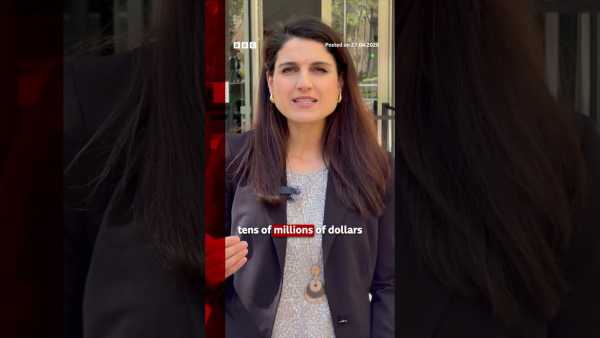
He is also demanding US$130 billion in damages from OpenAI, which his team refers to as “ill-gotten gains.”
He has accused Microsoft of “aiding and abetting” and contends that the company bears liability for a portion of these damages.
His legal team argues that OpenAI’s current models already qualify as AGI, as they have surpassed human intelligence in numerous tasks. According to the initial founding agreement, AGI could not be commercially licensed, which would encompass the license currently utilized by Microsoft for CoPilot.
Elon Musk wants more than $130 billion in damages from Sam Altman. #ElonMusk #SamAltman #BBCNews – YouTube
Watch On What’s at stake
Should Musk prevail, the repercussions would be substantial.
OpenAI’s planned initial public offering would almost certainly be jeopardized, with projections anticipating a US$1 trillion valuation in late 2026. Investors from the recent funding round could face demands for repayment.
Altman, recognized as the public face of the AI revolution, could be removed from the company he has led since 2019. The broader issue of whether AI laboratories initially established as charities can legally transition into commercial ventures would be definitively resolved, at least within California. This could have ramifications for Anthropic and other similarly mission-driven organizations.
Related stories
- Google AI breakthrough means chatbots use six times less memory during conversations without compromising performance
- AI may accelerate scientific progress — but here’s why it can’t replace human scientists
- New AI image generator runs using 10 times fewer steps than today’s best models — and it’s coming to smartphones and laptops
Even if Musk does not achieve victory, the controversy would persist.
The trial has already exposed the typically private dealings within Silicon Valley’s boardrooms, revealing personal journals, Slack communications, and HR documentation that present a less-than-favorable image of OpenAI’s corporate governance.
The case underscores a widespread public apprehension: a remarkably potent technology is being developed and controlled by a small group of feuding tech entrepreneurs. And it is the rest of us who must contend with the eventual outcomes.
This adapted article is reproduced from The Conversation under a Creative Commons license. Access the original article here.
TOPICS
Sourse: www.livescience.com