in News
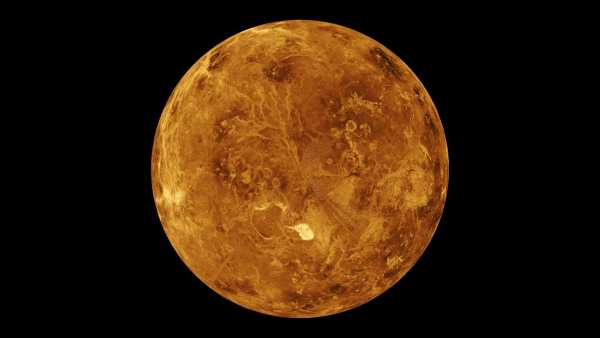
Venus, as seen by NASA’s Magellan spacecraft(Image credit: NASA/JPL)Share this article 0Join the conversationFollow usAdd us as a preferred source on GoogleSubscribe to our newsletter
Curious surface features on Venus, known as coronae, are likely crucial for comprehending our planetary neighbor’s previously mysterious interior. Utilizing historical data from NASA’s Magellan spacecraft, Anna Gulcher, an earth and planetary scientist at the University of Freiburg in Germany, has developed novel 3D models of the largest coronae to gain a deeper understanding of Venus’ perplexing geodynamics.
The research group employed data from the Magellan spacecraft’s radar instruments, which concluded their operation in 1994, to meticulously examine the topography and gravitational anomalies surrounding the coronae.
Coronae exhibit remarkable variation in size, shape, elevation, gravitational patterns, and tectonic context, suggesting they do not arise from a single formation process but rather represent a spectrum of dynamic phenomena, Gulcher and her associates state in a publication presented at the European Geosciences Union’s 2026 General Assembly in Vienna.
The updated catalog encompasses 741 coronae distributed across the surface of Venus.
These are immense circular formations with fracture systems that we believe are essentially the surface manifestation of a rising plume of hot material from the planet’s interior, Gulcher explained to me at EGU26 in Vienna.
Grasping the nature of these structures is vital not only for unraveling Venus’ geodynamic system but also for evaluating whether comparable processes might have been active on early Earth, Gulcher and colleagues report in their EGU paper.
By integrating gravitational and topographic data with geodynamic simulations, the investigation identifies potential warm mantle upwellings beneath 52 coronae and offers what may be the most compelling evidence that distinct plume-related tectonic activities occur there, according to Gulcher. Furthermore, the work indicates that current gravitational data may overlook numerous active tectonic signals, implying that activity on Venus could be more pervasive than currently detectable, she adds.
Anna Gulcher, earth and planetary scientist at the University of Freiburg in Germany. – YouTube
Watch On As For Why They Are Circular?
We surmise they originate from a circularly shaped source within the interior, Gulcher states. For instance, a magma plume that is hotter than the surrounding material can induce significant crustal uplift, leading to the formation of these ring-like structures, she elaborates.
The coronae are hypothesized to be a consequence of substantial mantle convection.
Mantle convection refers to the movement within the mantle (the layer between the core and crust) of any planet, where material can spread laterally and drive the movement of tectonic plates, Gulcher explains. It represents the cyclical upwelling and downwelling of mantle material over extended geological timescales, she notes.
Planetary scientists are still deliberating whether Venus ever experienced any geophysical processes akin to atmospheric carbon recycling. The most significant of these would have been large-scale plate tectonics, the theory postulating that our planet’s lithosphere is segmented into vast, mobile plates. The premise is that these plates frequently interact, causing seismic events, volcanic eruptions, and the continuous recirculation of carbon into and out of our atmosphere.
Earth is exceptionally fortunate to possess the unique capability for plate tectonics, which has enabled its atmosphere to remain stable over billions of years. Plate tectonics is arguably a key factor in a rocky planet’s potential to develop intelligent life.
On Earth, carbon is efficiently reintegrated into the mantle, Gulcher remarks.
This is partly due to the presence of extensive surface oceans on Earth, which formed hydrous (water-rich) rocks. Such rocks tend to weaken and become more pliable much more rapidly than the lithospheric rocks found on a dry planet like Venus. In fact, it’s possible Venus never harbored a large ocean; this is a significant puzzle that upcoming Venus missions aim to resolve.
It is now theorized that such oceanic bodies are essential for the creation of plate boundaries. This is when a planet’s lithospheric rocks become considerably more malleable, making them more susceptible to fracturing and separating into mobile tectonic plates.
Conversely, in the absence of oceans, Venus likely experienced very limited carbon recycling through tectonic and resurfacing processes, Gulcher concludes.
Additional insights are anticipated from future in-situ data collected on Venus.
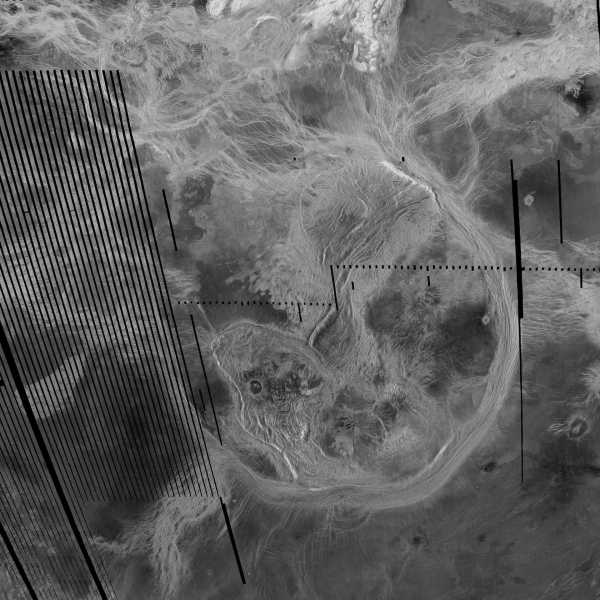
This striking Magellan image is centered at 30 degrees south latitude, 135 degrees east longitude, spans 3500 kilometers (2170 miles) from east to west (left to right), and showcases the nearly circular trough of Artemis Chasma. Its circular form and dimension (2100 km or 1302 miles in diameter) designate Artemis as the largest corona identified to date on Venus’s surface. Artemis could potentially encompass the majority of the U.S., from the Front Range of the Rockies (near Denver) to the West Coast.
(Image credit: NASA)
Upcoming missions, such as VERITAS and EnVision, will considerably improve our capacity to analyze coronae with unparalleled detail in surface and subsurface structure, along with enhanced topographic and gravity resolution, Gulcher and her team pointed out in a 2025 publication in the journal JGR Planets.
As For Earth?Related stories
- Venus may be geologically ‘alive’ after all, reanalysis of 30-year-old NASA data reveals
- Did Venus ever have oceans to support life, or was it ‘born hot’?
- Venus has thousands more volcanoes than we thought, and they might be active
Plate tectonics have maintained stability on Earth for at least 3 billion years, Gulcher states. This global process of material destruction and creation enabled our planet to dissipate significant heat and also to recirculate material back into the mantle, she explains. This continuous cycle has facilitated stable surface conditions on our planet over billions of years, Gulcher adds.
What concerns Gulcher the most about Venus?
We observe features on Venus that closely resemble Earth’s, yet they also exhibit a few critically important distinctions, Gulcher observes. With the current data, we do not fully comprehend how it can appear so similar while being so different, she concludes.
The initial version of this article was disseminated by Universe Today.
Sourse: www.livescience.com

